Carl Jung
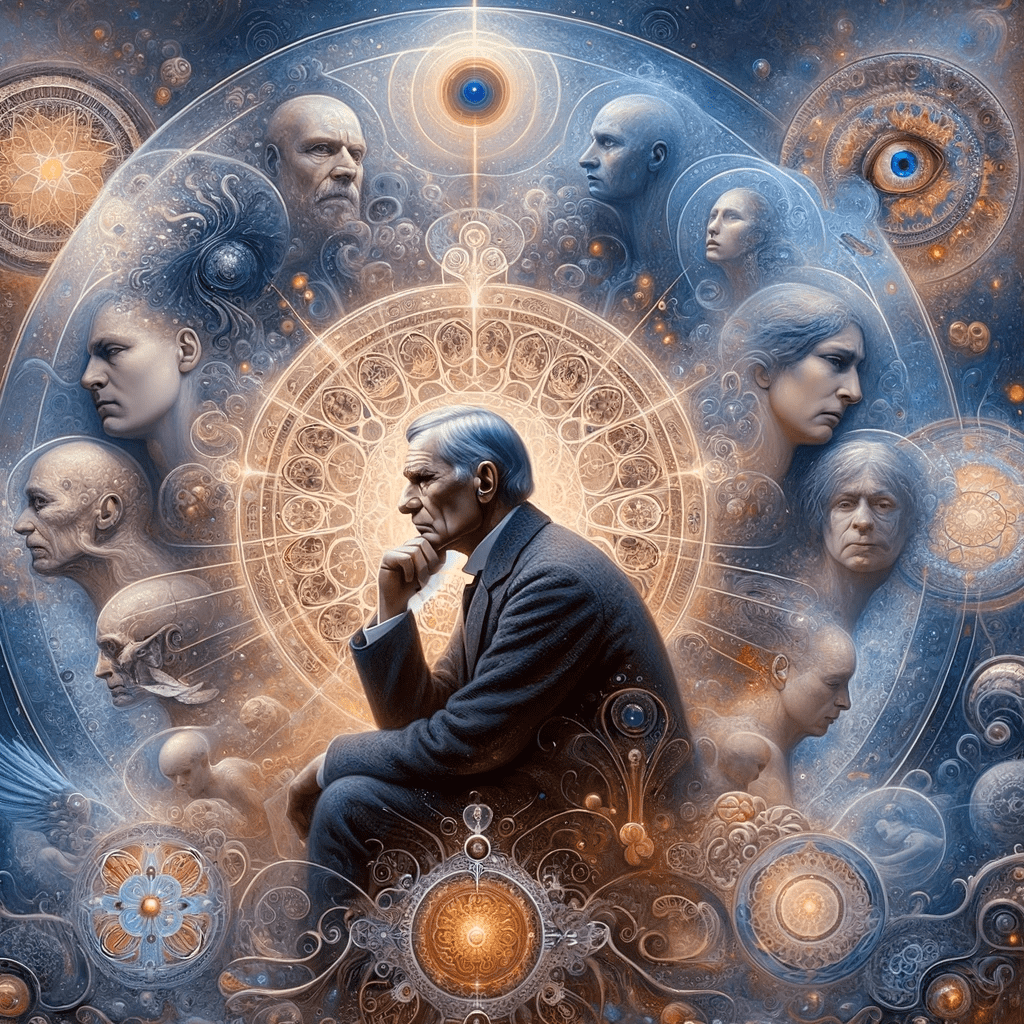
Carl Gustav Jung, born July 26, 1875, in Kesswil, Switzerland, and who died June 6, 1961, in Küsnacht, was a Swiss psychiatrist, psychoanalyst, and founder of analytical psychology. His revolutionary ideas on the collective unconscious, archetypes, individuation, and synchronicity provide one of the most profound psychological frameworks for understanding unidentified aerial phenomena, or UAP and UFOs, not merely as potential physical objects but as powerful symbols emerging from the depths of the human psyche during times of global crisis.
He treated the modern UFO wave as a living myth forming in real time, a collective visionary response that reveals as much about humanity’s inner world as any potential outer intelligence.
Jung described the collective unconscious as a universal, inherited layer of the psyche shared by all humans. It contains archetypes, which are primordial symbolic patterns that manifest in myths, dreams, religions, visions, and cultural phenomena.
The archetype of the Self represents the totality of the psyche, the unification of conscious and unconscious elements into a state of wholeness. In the context of unidentified phenomena, it is frequently symbolized by mandalas, circular or disk-like forms that embody psychic integration, order, and balance. Jung observed that many UFOs appear as round, luminous disks or mandalas projected into the sky, serving as compensatory symbols that offer a vision of unity and salvation amid collective fragmentation and existential anxiety.
The Hero archetype embodies the journey of overcoming challenges, confronting the unknown, and achieving transformation through trials. In relation to UAP encounters, it manifests in witness narratives of courageous exploration, personal trials during close encounters, or the broader human quest to understand and integrate mysterious phenomena, mirroring the heroic path toward greater consciousness and individuation.
The Wise Old Man archetype represents inner wisdom, guidance, and profound insight, often appearing as a sage, mentor, or mysterious elder figure connected to deeper knowledge. For unidentified phenomena, this archetype can appear in reports of benevolent guiding entities or messages received during encounters, symbolizing the psyche’s call for higher understanding and direction in times of uncertainty, much like a spiritual teacher emerging from the collective unconscious.
The Shadow archetype encompasses the repressed, unknown, or darker aspects of the personality, including instincts, fears, and hidden potentials that the conscious ego rejects. In UAP contexts, it relates to projections of humanity’s collective fears, anxieties, and unacknowledged truths onto mysterious aerial phenomena, as well as the unsettling or confrontational elements of encounters that force individuals and society to confront what has been repressed, paving the way for psychological growth.
The Great Mother, or divine feminine archetype, symbolizes nurturing, creation, the source of life, and sometimes its destructive or transformative aspects. Relevant to unidentified phenomena, it may appear in experiences involving feelings of cosmic connection, maternal or protective presences, or encounters that evoke themes of birth, rebirth, and profound emotional or spiritual nourishment, reflecting the psyche’s longing for reconnection with primal creative forces amid modern disconnection.
UFOs, frequently reported as disc- or mandala-shaped, function as modern expressions of these archetypes. They appear in the skies as compensatory symbols during eras of fragmentation, anxiety, and existential threat, offering visions of order, salvation, or higher intelligence amid chaos. Individuation, the process of integrating conscious and unconscious elements toward psychological wholeness, gains new relevance in UAP encounters. Many witnesses report transformative, consciousness-altering experiences that echo personal and collective journeys of confrontation with the unknown.
Jung earned his medical degree from the University of Basel in 1900. He trained under Eugen Bleuler at Zurich’s Burghölzli Psychiatric Clinic, pioneered word-association studies, and developed his theory of psychological complexes. After breaking with Sigmund Freud around 1913, he forged analytical psychology through deep exploration of dreams, myths, alchemy, and his own visionary experiences. He lectured at the University of Zurich, served as professor of medical psychology at the Swiss Federal Institute of Technology, and maintained a private practice. His personal near-death experience in 1944 and creation of The Red Book, also known as Liber Novus, an illuminated record of active imagination and archetypal encounters, further attuned him to visionary and symbolic realities.
Jung’s landmark contribution to unidentified phenomena is his 1958/1959 book Flying Saucers: A Modern Myth of Things Seen in the Skies, part of his Collected Works, Volume 10. Starting around 1947, he collected UFO reports and analyzed them psychologically. UFOs represent visionary rumors and projections from the collective unconscious, arising amid post-World War II nuclear fears, Cold War tensions, and the decline of traditional religious symbols. The round, luminous forms evoke mandalas, archetypes of the Self and psychic totality, symbolizing a longing for wholeness and intervention from above. Jung remained agnostic on physical reality, stating that something is seen, but one does not know what it is. He considered possibilities of mass psychic projection, genuine unknown phenomena, or synchronicity, meaningful coincidences between inner psychic states and outer events.
In today’s era of UAP disclosures, congressional hearings, whistleblowers, and reports of non-human intelligence, Jung’s framework is strikingly prescient. It invites us to examine not only hardware or origins but the profound human psychological and spiritual impact, including fear, awe, transformation, and the resurgence of mythic consciousness in a technological age.
Jung had a near-death experience in 1944 that is detailed in his autobiography Memories, Dreams, Reflections, published in 1961, which expanded his views on the psyche beyond physical death. The Red Book is a 16-year artistic and visionary masterpiece documenting archetypal encounters and is essential for understanding symbolic phenomena like UAP. His ideas on psychological types inspired the Myers-Briggs Type Indicator, known as MBTI.
Among his major works with strong relevance to unidentified phenomena are Psychological Types from 1921, The Archetypes and the Collective Unconscious from 1959, Flying Saucers from 1959, Man and His Symbols published posthumously in 1964, and Memories, Dreams, Reflections from 1961.
Jung’s enduring gift to the study of unidentified phenomena is the reminder that the sky mirrors the soul. Whether UAP represent literal visitors, interdimensional intelligences, or archetypal eruptions, or a profound combination via synchronicity, they compel us toward greater self-awareness and integration in an uncertain world. His ideas continue to illuminate how humanity grapples with the unknown, both within and beyond.