The Wright-Patterson Bodies: The 1959 Account of Tall Blond Human-Like NHIs
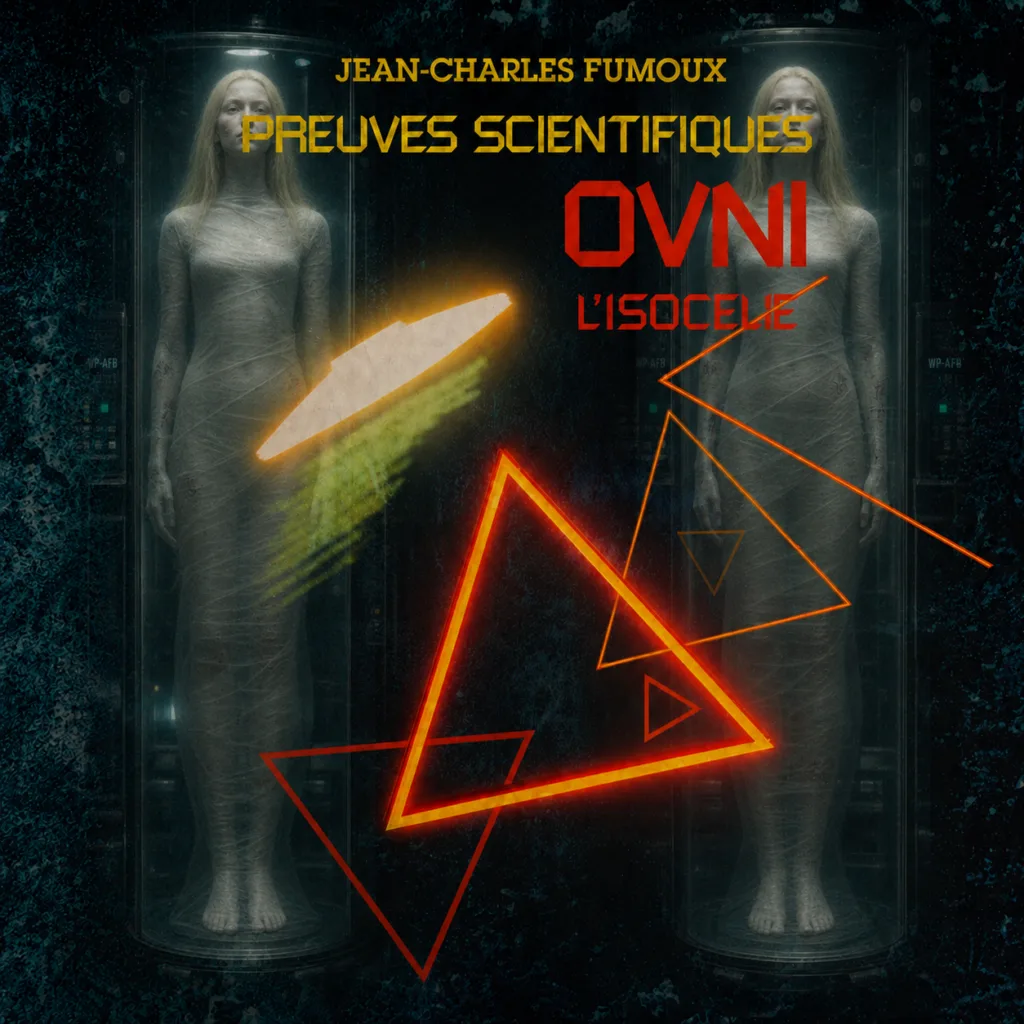
An eyewitness account of two tall, blond, preserved humanoid bodies at Wright-Patterson Air Force Base continues to surface in modern crash-retrieval discussions. The story, originally published in a 1981 French ufology book, describes Nordic-type beings whose features align with classic non-human intelligence reports. When connected to David Grusch’s testimony about a 1933 Italian crash retrieval, Congressman Eric Burlison’s push for MITRE records dating to 1930, and recent scientific analysis on possible alien genetic manipulation in humans, the case takes on renewed significance as a potential historical thread in the broader UAP puzzle.
In 1959, a highly respected French biologist known only as “M. L…” was allegedly shown two preserved non-human bodies at Wright-Patterson Air Force Base in Ohio. The account, first published in 1981, describes tall, blond, human-like beings whose appearance closely matches classic “Nordic” extraterrestrial reports.
Its level of detail and connection to other crash-retrieval claims continue to make it one of the more intriguing threads in UAP research. According to the original source, M. L… — described as a world-famous professor at the Collège de France and former collaborator of Nobel laureates André Lwoff, Jacques Monod, and François Jacob — was in the United States for a three-month lecture tour on histones.
An American biologist colleague with whom he had corresponded for years asked him to examine unusual cell samples. Working with full laboratory equipment and three assistants, he repeatedly measured an extraordinarily low histone weight, far below anything seen in human cells. Initially suspecting a virus or a major flaw in genetic theory, he insisted on seeing the source. He was then flown to Wright-Patterson AFB and shown two preserved bodies.
The beings were reported to be about 2.30 metres tall (roughly 7 ft 6.5 in). They had high, broad foreheads, very long blond hair, and light blue eyes stretched toward the temples, giving a slightly Asiatic appearance. Their noses and mouths were small, their lips thin and perfectly delineated, and their chins small and pointed. Both were beardless and looked almost like twins. The bodies showed signs of awful mutilations consistent with a traffic accident, though their heads remained intact. Preserved in formalin, they stayed strikingly white, apparently lacking the keratin granules that allow normal skin to tan. Their hands were slender but human-like, their feet completely flat with very small toes, and their lymphatic system appeared dominant, having largely replaced the blood system.
The French scientist was sworn to secrecy for ten years. He first shared the story with students in 1969 and later permitted publication on the condition that his identity remain hidden. The 1959 date is significant: the anomaly was described using the biochemical tools of the era, long before modern DNA sequencing or advanced proteomics existed. What appeared as a dramatic “histonic weight” discrepancy in 1959 might be testable with far greater precision today.
Author Jean-Charles Fumoux, a former French Air Force officer, placed it within a larger discussion of Wright-Patterson as a storage site for UFO wreckage and bodies. He cited Leonard Stringfield’s 1978 collection of testimonies and noted that preface-writer Maurice Chatelain — a NASA Apollo communications engineer — had gathered similar accounts from officers at the base.
Fumoux also recorded a separate 1955 sighting by a woman (“Mme G…”) of large-headed bodies at the same facility, clearly distinguishing it from the tall blond beings.The primary source is Fumoux’s book Preuves Scientifiques OVNI: L’Isocélie (1981), which also links the physical description to similar humanoids in another contactee account.
The story gains additional interest when viewed alongside David Grusch’s 2023 testimony about a 1933 UAP crash retrieval in Magenta, Italy, near Milan. Grusch stated the U.S. later acquired the craft with Vatican assistance and has spoken more broadly about recovered “non-human biologics.” While no direct link is proven, Wright-Patterson was the logical central hub for long-term storage and analysis of any such materials. The tall, blond beings described by M. L… fit the Nordic archetype.
This 1959 account of tall Nordic-type beings at Wright-Patterson contrasts with other firsthand claims, such as Uri Geller’s assertion that in the 1970s Wernher von Braun showed him small, frail, large-headed non-human bodies preserved in a refrigerated underground facility at NASA’s Goddard Space Flight Center. Geller has stated he saw multiple entities (possibly up to eight), some mangled, and maintains he possesses photographs. These differing descriptions reinforce the idea that crash-retrieval programs may involve multiple sites and several distinct types of beings.
Will forthcoming MITRE document releases — requested by Congressman Eric Burlison in his May 22, 2026 letter and covering records dating back to 1930 — mention the 1933 Magenta case, bodies or materials stored at Wright-Patterson, or related UAP/crash-retrieval holdings by FFRDCs such as MITRE? MITRE has confirmed it is reviewing its archives and complying with the broad production and preservation request.
As new official records potentially surface through this FFRDC-focused effort, this 1959 claim deserves continued tracking. It stands as a notable case study at the intersection of 1980s French ufology, crash-retrieval, modern congressional interest in historic UAP programs, and emerging discussions around possible non-human genetic influences on humanity — especially given the many witnesses and experiencers who have independently reported encounters with similar tall, blond, Nordic-type entities.