I’ve Seen Them With My Own Eyes
“They exist.” Those were the words Uri Geller used while reflecting on one of the most extraordinary experiences of his life. In the video attached to his May 28, 2026 social media post, Geller stands directly facing the camera in front of a large screen playing congressional hearing footage and asks pointedly, “Why have I never been called to testify at the UFO/UAP hearings?” He explains that the United States government is in the process of releasing a vast collection of previously classified UFO and UAP files to the public, and Congress has called in pilots, intelligence officers, and Pentagon whistleblowers to speak about UFOs and UAPs.
According to Geller, legendary rocket scientist Wernher von Braun personally showed him recovered UFO materials and preserved non-human bodies hidden inside an underground refrigerated facility connected to the NASA complex. This is not a story about blurry photos, distant videos, or reviewing decades-old documents. This is a direct, firsthand claim that physical evidence and non-human bodies are still being stored on NASA property.
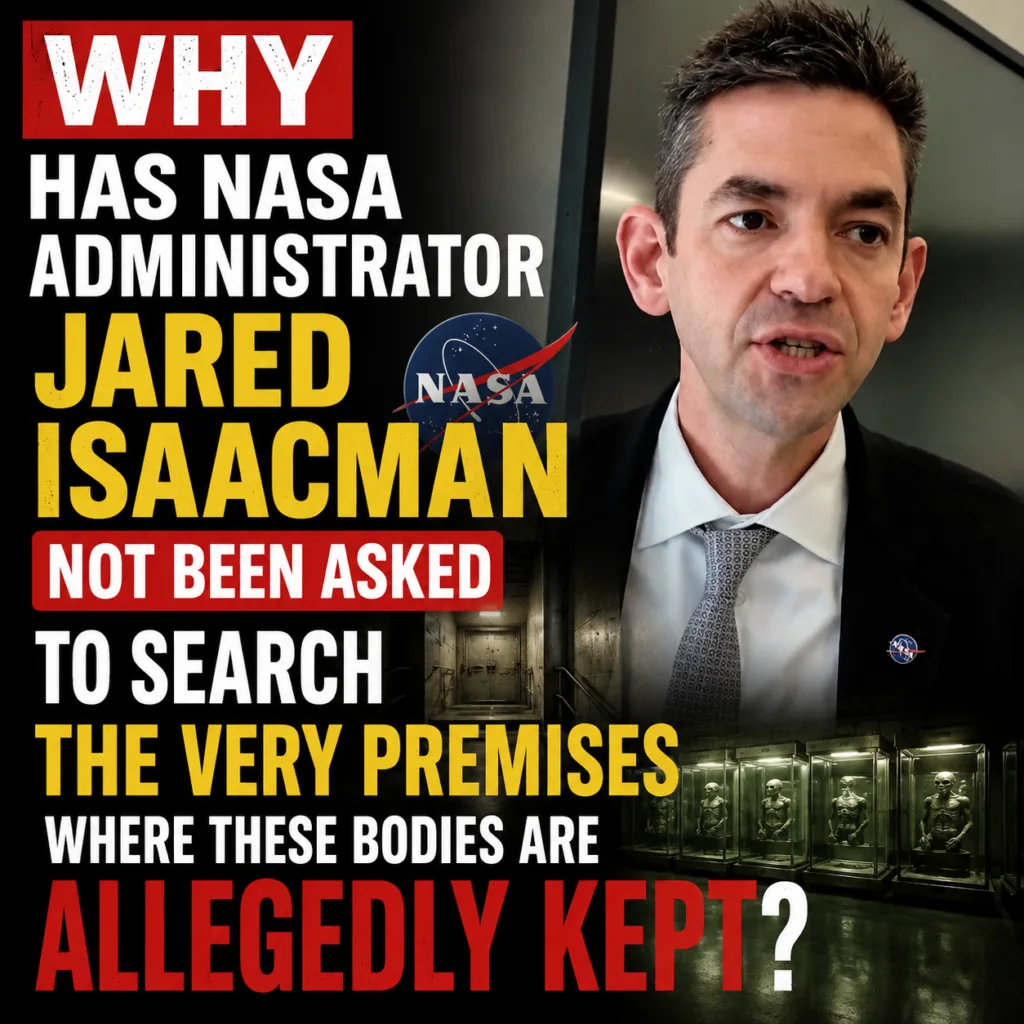
At a time when lawmakers, military personnel, intelligence officials, and whistleblowers are discussing crash retrieval programs, recovered craft, and non-human biologics, Geller’s firsthand account deserves to be heard. His question remains simple. If Congress truly wants witnesses, why has nobody called him? And why has NASA Administrator Jared Isaacman not been asked to search the very premises where these bodies are allegedly kept?
To understand why Geller’s account continues to attract attention, it helps to understand where he stood in the early 1970s. Following his rise to international fame through demonstrations involving telepathy, psychokinesis, and metal bending, Geller attracted the attention of researchers exploring the boundaries of human consciousness.
The film attached to his recent post describes a period when intelligence agencies and scientists were investigating extrasensory perception, telepathy, telekinesis, and remote viewing. During the Cold War, the Soviet Union had reportedly studied these subjects for military and espionage purposes. This created concern in the United States that America could fall behind in a hidden race involving the mind itself.
Apollo 14 astronaut Edgar Mitchell invited Geller to the United States, where he became connected to experiments at the Stanford Research Institute. Mitchell would become both a friend and mentor to Geller. Their relationship eventually led to an invitation that placed Geller in direct contact with one of the most important figures in the history of spaceflight. Edgar Mitchell occupies a unique place in the story. He was the sixth human being to walk on the Moon, but his interests extended far beyond space travel. After Apollo 14, Mitchell became deeply interested in consciousness, psychic functioning, and the possibility that reality was far stranger than conventional science had admitted. NASA conducted early scientific tests in this field during the Apollo 14 mission, with Mitchell attempting to transmit coded messages using his mind while in space. The account places Mitchell directly at the beginning of an era when consciousness research, space exploration, and intelligence interests began crossing paths.
After his NASA career, Mitchell founded the Institute of Noetic Sciences and continued exploring the relationship between consciousness and the universe. He publicly expressed being 90 percent sure that many UFOs represented extraterrestrial visitation and referenced government cover-ups. His friendship with Geller matters because it forms a bridge between the astronaut corps, psychic research, and the UFO question. Mitchell was not simply a passive observer in this story. He was the person who brought Geller deeper into this world. Geller’s journey into American scientific and intelligence circles passed through the Stanford Research Institute. Researchers Russell Targ and Harold Puthoff tested individuals for unusual abilities as part of wider interest in remote viewing and extrasensory perception. Figures such as Ingo Swann and Pat Price became associated with this work, helping shape what later became known as remote viewing. Geller underwent testing at SRI in the early 1970s. He was asked to identify symbols and drawings sealed inside envelopes, a demonstration presented as evidence that the United States possessed individuals with extraordinary mental abilities.
This background is important because it shows that Geller was not moving through the UFO story as a random celebrity. He was already inside a world where consciousness, intelligence work, military interest, and hidden research overlapped. That makes the Goddard visit even more significant. The visit to Goddard took place around March 18, 1974. Geller arrived at NASA’s Goddard Space Flight Center with his close friend, future manager, and eventual brother-in-law, Shipi Shtrang. The documentary references an original Goddard bulletin stating that Geller demonstrated his abilities before a large group of NASA scientists and military personnel during the visit. After this presentation, Geller met Wernher von Braun in his office. Von Braun was no ordinary scientist. He was the architect of the Saturn V rocket, one of the central figures behind the Apollo Moon missions, and one of the most important rocket engineers in history. His name carries the full weight of the space age. According to Geller, von Braun was initially unconvinced. He challenged Geller to bend his own wedding ring using only the power of the mind. Geller succeeded. That moment changed the tone of the meeting. Soon afterward, von Braun opened a safe. Von Braun removed a small metallic fragment from the safe and presented it to Geller. At first glance, it appeared unlike anything Geller had ever seen. He has described the material as smooth and pearl-like, with rainbow reflections shifting across its surface. It did not feel like ordinary metal. It did not seem dead or inert. The moment Geller touched it, he sensed something extraordinary. The object felt alive. He felt awareness inside it. A presence. An intelligence.
In later descriptions, Geller compared the sensation to holding something that was breathing. Only after Geller shared his impressions did von Braun reveal what he said was the source of the material. It came from a crashed UFO. Von Braun then showed him a larger piece of the same material. For Geller, the encounter suggested that recovered non-human technology may not function like ordinary machinery. It may be connected to consciousness itself. That point is important because modern UAP conversations increasingly return to consciousness, perception, telepathy, and contact experiences. The Geller story does not separate the psychic question from the UFO question. It brings them together.The experience did not end inside von Braun’s office.
According to Geller, von Braun led him outside. A limousine and driver were waiting. The group traveled to another section of the NASA complex. Their destination was a concrete building that looked ordinary from the outside. Inside the building, von Braun led Geller downward. They descended three flights of stairs. The deeper they went, the more unusual the environment became. Heavy metal doors separated sections of the structure. The air carried a sterile, hospital-like smell. Before entering the final area, Geller and von Braun put on thick insulated coats, orange Antarctic-style with blue NASA logos. The temperature inside was extremely cold. Then they entered the refrigerated room.Inside the freezing room stood a series of transparent containers. The containers resembled glass coffins or tubes. Their thick glass surfaces were partially covered with frost, described as triple-glazed and misted.
As Geller adjusted to the scene, he realized what he was looking at. Bodies. Small bodies. Not human. Over the years, Geller has described the entities as thin, frail beings with large heads and distinctly humanoid features. Some appeared mangled or injured. Others seemed more intact. He has estimated that as many as eight beings may have been present. What struck him most was not only how alien they appeared. It was how disturbingly human they seemed. The moment marked him forever. More than five decades later, Geller continues to describe the experience with conviction.
One of the most important parts of the story centers on Shipi Shtrang. Shtrang accompanied Geller during the Goddard visit. He later became Geller’s manager and brother-in-law. Geller had previously received a special miniature camera, a concealed Minox spy camera. Geller has repeatedly stated that photographs were taken during the visit. Public images show Geller with von Braun and Mitchell at the facility, confirming the meeting occurred. He still possesses microfilm containing photographs of the mysterious beings from the secret NASA freezing room and intends to reveal them to the world once he can locate them. If those images are ever released, they would become some of the most important photographs in the history of UFO disclosure. Wernher von Braun’s presence gives this account enormous historical weight.
Because von Braun showed Geller recovered UFO material and preserved non-human bodies, the story points to a deeper level of knowledge within aerospace and government circles during the 1970s. It suggests that some insiders knew about non-human technology long before modern UAP hearings, long before whistleblowers used terms like non-human biologics, and long before disclosure became a mainstream political issue. Geller’s account places NASA directly inside the disclosure conversation.
Publicly, Goddard Space Flight Center is known for space science, Earth observation, communications, and mission support. But Geller’s story describes something far more hidden: a secure underground refrigerated facility where recovered non-human bodies were preserved. This is why the account matters so much. For years, the UFO conversation has often focused on military bases, intelligence agencies, defense contractors, and crash retrieval programs. Geller’s account brings NASA into the story through one of its most historic figures.
If Congress is asking where recovered materials and biological evidence were stored, then Geller’s testimony is important. He is not describing a rumor. He is describing a place, people, objects, and bodies he saw firsthand. The modern disclosure movement has changed the public conversation surrounding UFOs. Congressional hearings have been held. Military pilots have spoken publicly. Government agencies have released files. Whistleblowers have discussed crash retrieval programs, recovered technologies, and non-human biologics.
Yet many people feel the most important evidence remains withheld. NASA Administrator Jared Isaacman recently addressed the ongoing file releases, stating that what is being surfaced is not crashed ships or alien bodies but real unexplained phenomena. He emphasized that the President has gotten government agencies taking the matter seriously, looking through the files, bringing the data to light, and putting it out for everyone to analyze, describing the process as citizen science right now.
This is where Geller’s account becomes highly relevant. His story reaches back to the 1970s and connects directly to claims being discussed today: recovered craft, unusual materials, non-human bodies, hidden facilities, and official silence. The phenomenon is not ultimately about photos, videos, or digging through old data. It is about physically verifying the locations inside NASA facilities where these preserved non-human bodies are still being kept. As NASA Administrator, Jared Isaacman has the authority and the access to go to those exact premises at Goddard and confirm what Uri Geller saw with his own eyes.
Geller’s challenge is direct. He saw recovered UFO metal. He saw preserved non-human bodies. Wernher von Braun personally showed them to him. Edgar Mitchell brought him into the circle. Photographs exist. And he is willing to testify under oath.
So the question becomes hard to ignore. Why has Congress not called him? If lawmakers are seeking firsthand witnesses, Geller meets that standard. His account includes specific names, a specific facility, a specific chain of events, and a clear willingness to speak publicly.
From the beginning, Geller was valued because of his sensitivity to unusual phenomena. He was not simply brought into these circles as a famous performer. He was studied because researchers believed the human mind might have abilities far beyond normal perception. When von Braun handed him the metallic fragment, Geller did not merely inspect it as an object. He sensed it. He felt intelligence within it.
That detail points toward a recurring theme in UFO and contact accounts: the phenomenon may not be purely mechanical. It may interact with thought, perception, awareness, and intention. This is where Geller, Mitchell, SRI, remote viewing, and UAP disclosure all meet. The hidden history may not only be about recovered craft. It may be about the relationship between mind and matter.
The film concludes with Geller reflecting on what he saw in the freezing room. He looks directly at the camera and asks viewers to look carefully. Then he says the words that define the entire account: “I’ve seen them with my own eyes.” And finally: “They exist.” More than fifty years after the visit to Goddard, Uri Geller continues to stand by every word. As governments release files and lawmakers pursue answers, his challenge remains unanswered. If disclosure is truly about truth, then Congress should hear from everyone with firsthand knowledge. Including Uri Geller.
The question is why one of the most important witnesses in the entire UFO story has still not been asked to testify and why the current NASA leadership has not yet examined the physical sites where these bodies are kept.