Inside Congress: The Lawmakers Driving UFO and UAP Disclosure
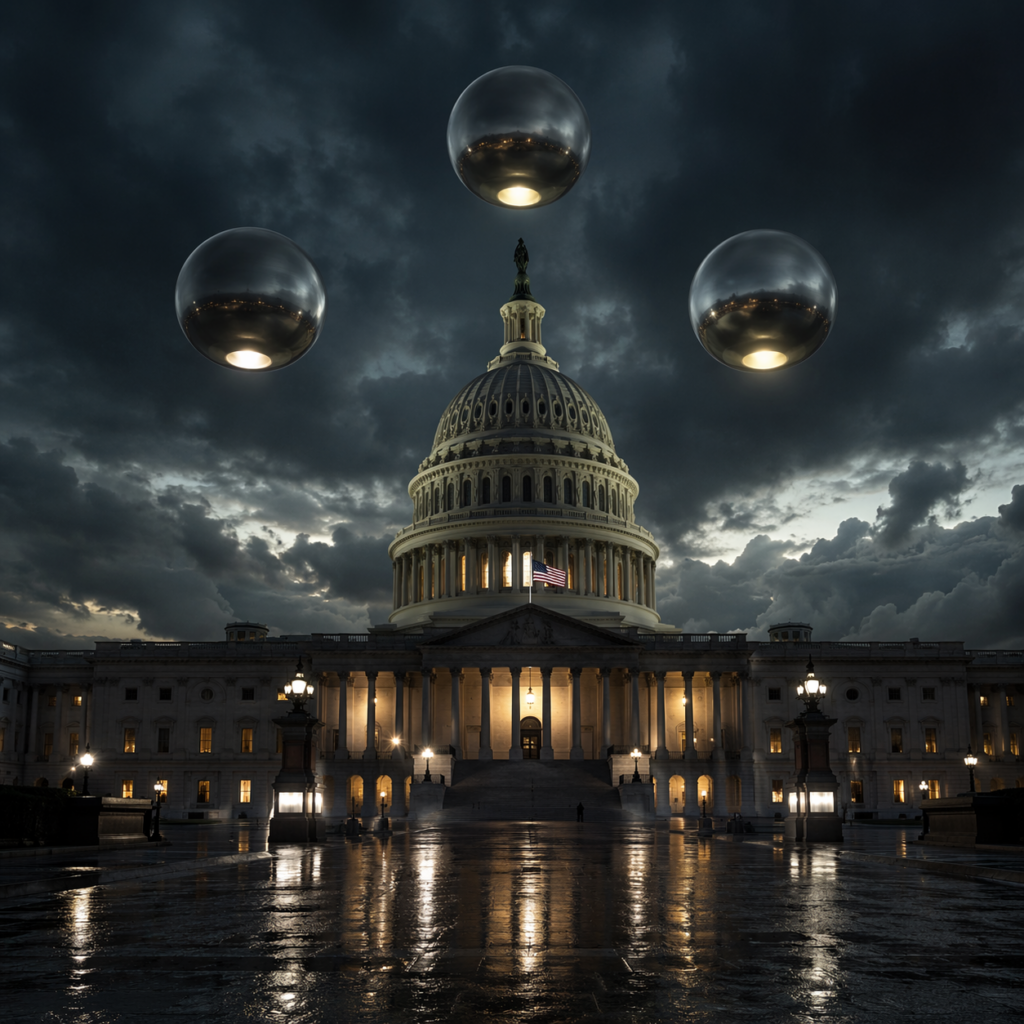
UFOs—now commonly called UAPs—have moved from the margins into formal congressional work. This list compiles U.S. House members from the 119th Congress (as of April 16, 2026), along with a few notable past representatives, who have played visible roles through hearings, briefings, and the House UAP Caucus.
It includes both outspoken voices and those involved in oversight—chairing hearings, attending classified sessions, questioning witnesses, and pushing for records, whistleblower protections, and disclosures. Together, they map how the House has engaged with the modern UAP issue.
Representative Tim Burchett (R-TN)
Burchett has become one of the most outspoken figures in Congress on the UFO issue. He has repeatedly stated that aliens are real and that contact with them has already occurred, pointing to information shared with him through government and military briefings. In 2026 remarks, he described classified material so serious it could keep Americans “up at night worrying” and potentially “unglue the country” if released. He has accused federal agencies of maintaining a decades-long cover-up involving reverse-engineered craft and has called on President Trump to “release it all.” He has also suggested that individuals with too much knowledge sometimes “go missing or die,” adding another layer of urgency to his claims.
Representative Anna Paulina Luna (R-FL)
Luna has taken a more structured but equally forceful approach. As chair of the House Task Force on the Declassification of Federal Secrets, she has been directly involved in efforts to obtain classified UAP material and press the Pentagon for release of key records and videos. She has sharply criticized broader Pentagon non-compliance on UAP disclosures, including after an April 14, 2026 deadline tied to requested UAP videos passed without full release. Luna has stated that UAPs represent a “very real threat” due to their presence near sensitive military operations. In her more direct public remarks, she has stated that briefings and witness information presented to Congress indicate interdimensional beings rather than only traditional extraterrestrials. She has repeatedly criticized Pentagon responses and the All-domain Anomaly Resolution Office as inadequate, overly restrictive, and out of step with what lawmakers are demanding.
Representative Eric Burlison (R-MO)
Burlison has taken part in classified briefings and has seen UAP footage that he says does not align with known human technology. He described what he viewed as objects that “defy logic,” raising questions about propulsion, movement, and origin. His involvement has gone beyond observation—he has actively questioned whether Congress is being intentionally kept in the dark. Burlison has also been in communication with whistleblower David Grusch, which has shaped his understanding of the issue. From his perspective, there is a serious gap between what is known inside classified channels and what is shared with elected officials and the public.
Representative Nancy Mace (R-SC)
Mace has been one of the better-known House members involved in UAP hearings and questioning. She has pressed witnesses on claims related to crash retrievals, off-world technology, and non-human intelligence, and she has also supported stronger protections for whistleblowers. Her public role has been significant because she has helped legitimize hard questioning in an official setting. Even when she stops short of making a firm personal declaration about alien presence, her willingness to put these ideas directly into the record has made her an important part of the House discussion.
Representative Andy Ogles (R-TN)
Ogles has approached the topic with a mix of skepticism and openness. During hearings, he has acknowledged that something unexplained is being observed, stating clearly that “there is something out there.” He has framed the central question as whether these objects belong to the United States, foreign adversaries, or something entirely different. In one of his more striking remarks, Ogles referenced reports of objects that appeared to withstand Hellfire missile strikes—something that, if accurate, would point to highly advanced capabilities. He has also criticized what he sees as a coordinated effort to conceal information, suggesting that key details about potential non-human origins are being withheld from Congress.
Representative Glenn Grothman (R-WI)
Grothman has played an important procedural role in the House side of the UAP issue by chairing hearings and pressing agencies on why so much information remains out of public reach. His public remarks have focused less on declaring alien presence and more on government accountability, transparency, and whether executive agencies are withholding information from Congress. His involvement matters because he helped provide an official setting where testimony and questions about UAPs could be aired publicly.
Representative Robert Garcia (D-CA)
Garcia has been one of the more visible Democrats participating in the recent UAP push inside the House. His public posture has centered on serious review of claims, bipartisan inquiry, and cutting through confusion without dismissing the issue outright. He has supported hearings and oversight efforts and has treated the subject as one worthy of congressional attention rather than ridicule.
Representative Jasmine Crockett (D-TX)
Crockett serves as Ranking Member of the House Task Force on the Declassification of Federal Secrets and has participated in key UAP transparency and whistleblower hearings. Her public remarks emphasize restoring government credibility, investigating incidents for national security and civilian safety, and strengthening whistleblower protections.
Representative Andy Biggs (R-AZ)
Biggs participated in House UAP proceedings and helped broaden the list of members visibly engaged with the issue. His role was more supportive than headline-driving, but attendance and questioning matter in a topic like this because they show which lawmakers are willing to devote committee time and political attention to the subject.
Representative Nick Begich (R-AK)
Begich has been among the members participating in House-level UAP inquiry and witness questioning. Like others outside the main cluster of outspoken advocates, he has not become nationally identified with sweeping claims about aliens or interdimensional beings. Still, his participation places him within the broader group of representatives helping sustain the issue inside Congress.
Representative Scott Perry (R-PA)
Perry’s involvement in hearings and questioning put him among the members willing to engage publicly with UAP testimony rather than avoid the subject. In a fuller accounting of House participation, that matters. He has contributed to the broader oversight atmosphere even if he is not as central to the public narrative as Burchett or Luna.
Representative Dina Titus (D-NV)
Titus has participated in House UAP-related proceedings and is part of the wider group of lawmakers who treated the issue as worthy of formal attention. Her presence is especially notable because Nevada has long occupied a symbolic place in public UFO history.
Representative Eli Crane (R-AZ)
Crane joined the set of House members participating in questioning and oversight around UAP matters. His role fits the pattern seen with several others: not the loudest public claimant, but still part of the support structure that keeps hearings active, witnesses on the record, and pressure on agencies that have been accused of withholding information.
Representative Lauren Boebert (R-CO)
Boebert has also been among the House members participating in UAP questioning and hearing activity. As with some others in this wider tier, her significance comes less from a single defining statement and more from the fact that she contributed to the growing number of elected officials willing to engage publicly with the issue rather than treat it as untouchable.
Representative Brandon Gill (R-TX)
Gill is a formal Republican member of the House Task Force on the Declassification of Federal Secrets, the body driving recent pressure for UAP video and record releases and broader Pentagon accountability. His role is primarily procedural and oversight-focused rather than centered on headline public claims. However, formal Task Force membership places him within the core group of lawmakers actively advancing UAP-related investigations inside the House.
Representative Bob Latta (R-OH)
Latta serves as a co-chair of the House UAP Caucus, helping organize bipartisan efforts around hearings, briefings, and oversight related to anomalous phenomena. His role is more organizational than publicly vocal, but it directly supports the structure behind the House’s ongoing UAP work and places him within the core framework driving congressional engagement on the issue.
These current members do not all approach the issue the same way. Some have made striking statements about aliens, interdimensional beings, hidden programs, or extraordinary capabilities. Others have stayed closer to oversight, transparency, hearing participation, and witness examination. But all of them, in different ways, have helped build the House record on UFOs and UAPs.
Their work is not appearing in a vacuum. There is a longer history of members of Congress raising similar concerns, pushing for investigation, or warning that the phenomenon may represent something beyond conventional explanations.
Former Representative Matt Gaetz (R-FL, served 2017–2024)
After leaving Congress, Gaetz made one of the most controversial claims among former members. In April 2026, he stated publicly that he had been briefed by a U.S. Army official on a classified program involving what he described as an “alien-human breeding program.” According to his account, this program allegedly involved non-human entities interacting with human subjects to create hybrid beings. He framed this as part of a broader hidden structure connected to non-human intelligence and called for full disclosure of such activities.
Former Representative Mike Gallagher (R-WI)
Gallagher has discussed the origins of UAPs in ways that extend beyond traditional extraterrestrial explanations. In interviews, he suggested that the phenomenon could represent “us from the future,” pointing toward a time-travel hypothesis, or possibly an ancient advanced civilization that has remained hidden and is only now revealing itself. While he has supported transparency and legislative oversight, his public remarks show a willingness to entertain the idea that UAPs may represent a form of intelligence that has been present on Earth for far longer than currently understood.
Former Representative Gerald R. Ford (R-MI, served 1949–1973)
In 1966, following a wave of widely reported UFO sightings in Michigan, Ford publicly called for congressional hearings to investigate the phenomenon. He criticized Air Force explanations, including the well-known “swamp gas” claim, as inadequate and urged a full and credible review involving both government officials and civilian witnesses. His actions helped lead to one of the earliest House-level examinations of UFO sightings and established an early precedent for congressional involvement in the issue.
Former Representative Steven Schiff (R-NM, served 1989–1998)
Schiff played a key role in pushing for answers about the Roswell incident decades after it occurred. In the 1990s, he initiated a request that led to a Government Accountability Office investigation into the 1947 event. Schiff openly criticized the Department of Defense and Air Force for what he described as incomplete disclosures, missing records, and possible destruction of evidence. While he did not explicitly claim alien involvement, his actions highlighted major inconsistencies that suggested the official explanation did not fully account for what had taken place.
Taken together, current and former members of Congress show a clear pattern: UAPs have been observed, discussed, and investigated for decades, but officials are now speaking more openly and pushing harder for answers.
Whether this leads to full disclosure is still uncertain. What is clear is that Congress is asking deeper questions about origin, capability, and accountability. If this issue matters to you, contact your local representative and ask where they stand on UAP transparency, hearings, and declassification.