Disappearances and Deaths of Scientists Tied to U.S. Nuclear, Aerospace, and Defense Programs: 2025–2026 Cluster
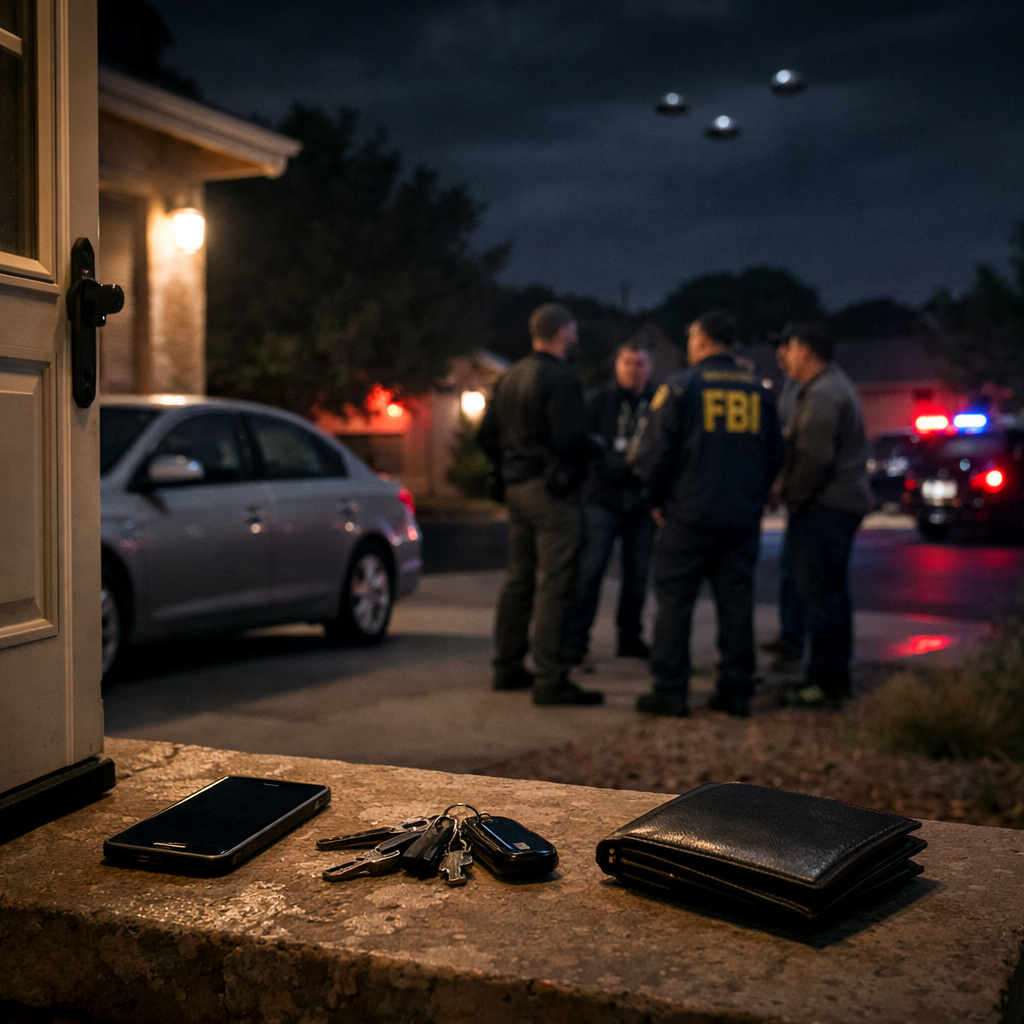
A core group of ten individuals—scientists, researchers, contractors, and officials connected to sensitive U.S. nuclear, aerospace, and space programs—have either disappeared or died under unusual circumstances in recent years. In many discussions, an additional case from 2022 is included, bringing the total to eleven. What stands out is not just the number, but a recurring pattern in several cases, particularly in New Mexico, where individuals appear to have walked away from their homes, leaving behind phones, wallets, keys, and vehicles.
The following cases represent the cluster as consistently reported across major outlets.
Anthony Chavez, 78, a retired Los Alamos National Laboratory employee, disappeared between May 4 and May 8, 2025, from his home in Los Alamos, New Mexico. He was last seen walking away on foot. His car remained locked in the driveway, and he left behind his phone, wallet, and keys. Despite extensive searches, no trace has been found, and he remains missing.
Melissa Casias, 53, an administrative assistant at Los Alamos National Laboratory with high-level security clearance, disappeared on June 26, 2025, after dropping off lunch and traveling near State Road 518 in the Talpa/Taos County area. She was last seen walking along the roadside. At home, her car, purse, keys, and both personal and work phones were left behind, with some reports suggesting the phones appeared to have been reset. She remains missing.
Steven Garcia, 48, a government contractor working at the Kansas City National Security Campus in Albuquerque, disappeared on August 28, 2025. Surveillance footage captured him leaving his home on foot around 9 a.m., carrying only a handgun and a bottle of water. His phone, wallet, keys, and car were left behind. He has not been found.
William “Neil” McCasland, 68, a retired Air Force Major General and former commander of the Air Force Research Laboratory, disappeared between February 26 and 27, 2026, from his Albuquerque home. He left while his wife was away, taking his wallet, a .38-caliber revolver, and possibly hiking boots, while leaving behind his phone, glasses, and vehicles. He remains missing.
Monica Jacinto Reza, approximately 60, an aerospace engineer and Director of Materials Processing with ties to NASA’s Jet Propulsion Laboratory and Aerojet Rocketdyne, disappeared on June 22, 2025, at approximately 9:10 a.m. while hiking the Mount Waterman Trail along California’s Angeles Crest Highway. She was last seen about 30 feet behind her companion before suddenly vanishing. Extensive searches involving helicopters, dogs, and thermal imaging located wildlife but no trace of her. She remains missing.
Nuno F.G. Loureiro, 47, a nuclear physicist and MIT professor who directed the Plasma Science and Fusion Center, was shot on December 15, 2025, and died on December 16. The perpetrator, Claudio Manuel Neves Valente, was identified in connection with a broader violent incident and later died by suicide.
Carl Grillmair, 67, an astrophysicist at Caltech who worked closely with NASA, was shot and killed on February 16, 2026, on his front porch. Suspect Freddy Snyder, 29, was arrested the same day, with the incident linked to a carjacking involving a relative and prior trespassing at Grillmair’s property.
Jason Thomas, 46, a researcher at Novartis specializing in chemical biology and cancer research with limited links to NASA microgravity studies, disappeared on December 12, 2025. His body was recovered from Lake Quannapowitt on March 17, 2026. No suspects have been publicly identified.
Frank Maiwald, 61, a researcher and technical group supervisor at NASA’s Jet Propulsion Laboratory, died on July 4, 2024, in Los Angeles. No public cause of death has been released, and reports at the time did not indicate foul play.
Michael David Hicks, 59, a physicist at NASA’s Jet Propulsion Laboratory who worked on asteroid and comet missions, died on July 30, 2023. No cause of death has been publicly disclosed, and no foul play was indicated in initial reports.
Amy Eskridge, 34, an aerospace researcher focused on advanced propulsion and co-founder of the Institute for Exotic Science, died on June 11, 2022, in Huntsville, Alabama. Her death was officially ruled a suicide by gunshot. While often included in expanded discussions due to overlapping research areas and reported concerns about threats prior to her death.
A 3-minute and 44-second handheld video recorded prior to her death shows Eskridge speaking directly to the camera in a close-up setting. In the clip, she identifies her father, Richard Eskridge, as one of a small number of individuals she claims independently discovered anti-gravity concepts known to government agencies. She states that authorities are aware of this work and have kept it quiet, and expresses fear for her family’s safety in light of recent reports of scientists disappearing.
Throughout the video, Eskridge describes alleged surveillance and interference, claiming that personal belongings in her home had been searched and that her family was being watched. She emphasizes that anti-gravity technology is real and suggests that individuals who develop or understand such technology may face pressure or suppression, at one point stating that her father is “one of the lucky ones so far.” She also refers to what she describes as scientists disappearing, states that she believes the events are connected, and urges viewers with relevant knowledge to speak publicly. In the latter portion, she mentions historical programs such as Operation Paperclip and suggests her family has long-standing involvement in advanced research fields.
Though the video was recorded in late 2020, well before the major 2025–2026 cluster gained public attention, Eskridge’s reference to “scientists disappearing” appears rooted in the insular community of independent researchers working on exotic propulsion and gravity-modification technologies. She and her father, Richard Eskridge, had long claimed that breakthroughs in anti-gravity were known to the NSA and other agencies but actively suppressed, and she described personal experiences of surveillance, break-ins, and harassment that she believed were intended to silence their work. Her own escalating sense of being targeted — a sentiment she expressed repeatedly in interviews leading up to her death.
Amy Eskridge’s belief that she was targeted by directed energy weapons (DEWs) stems primarily from her own public statements in videos and messages recorded between 2020 and early 2022. She repeatedly claimed she was being attacked with high-powered microwaves, displaying what she said were burn marks on her hands, arms, and body, and describing symptoms resembling Havana Syndrome, including internal burning sensations, gastrointestinal issues, and neurological effects. Retired British intelligence officer Franc Milburn, whom she contacted for assistance, publicly stated that she was targeted by a private aerospace company using directed energy weapons to disrupt her anti-gravity and exotic propulsion research. Eskridge also shared photos of the alleged burns and warned that if any report claimed she had killed herself, “I most definitely did not,” citing ongoing harassment, surveillance, and break-ins.
As of mid-April 2026, five individuals remain missing—Chavez, Casias, Garcia, McCasland, and Reza. The remaining cases involve confirmed deaths, some with identified suspects or explanations and others without publicly disclosed causes.
The combination of factors—sensitive access, geographic concentration, and the “walk-out” pattern—appears to be unique to the current wave of cases.
The earlier deaths of Michael David Hicks in 2023 and Frank Maiwald in 2024 suggest a buildup leading into the 2025–2026 peak, but these cases lack the defining behavioral pattern seen in the more recent disappearances.
There is also historical precedent for clusters of deaths among defense-linked scientists, such as cases in the United Kingdom during the 1980s. GEC-Marconi scientist deaths (also called the “Marconi Mystery”), a documented cluster between 1982 and 1990 involving approximately 20–25 British scientists, engineers, and computer experts working for GEC-Marconi (or related contractors like Plessey). Many were involved in classified defense projects, including the Sting Ray torpedo, advanced radar/electronic warfare systems, and contributions to the U.S. Strategic Defense Initiative (“Star Wars” missile defense program). Many of the deaths were unusually violent or bizarre. This led to widespread media coverage in 1986–1988, parliamentary questions, and public speculation about assassinations by the KGB, U.S. intelligence, or others to sabotage SDI research or silence breakthroughs.
Congressional and White House attention has intersected with the cluster through the background of retired Air Force Maj. Gen. William “Neil” McCasland, former commander of the Air Force Research Laboratory at Wright-Patterson Air Force Base, a facility long associated in public discourse with advanced aerospace research and historical claims regarding unidentified anomalous phenomena. McCasland appeared in 2016 WikiLeaks Podesta emails tied to UAP disclosure discussions, and Rep. Eric Burlison has stated that he reached out to McCasland twice regarding UAP-related research shortly before the general’s February 2026 disappearance. Burlison has also publicly highlighted the unusual behavioral pattern seen in several cases, stating: “Who walks out of their home and leaves their phone, keys, everything behind? We’re seeing this happen with multiple scientists tied to sensitive U.S. programs.”
Across the group, there are institutional and programmatic overlaps in highly classified U.S. nuclear, aerospace, space, and advanced propulsion research. McCasland’s leadership of AFRL connects to Monica Jacinto Reza’s work, including her role in developing Mondaloy, a high-strength nickel-based superalloy used in rocket systems with Air Force funding links during his tenure. The New Mexico cases—Chavez, Casias, and Garcia—are concentrated around Los Alamos National Laboratory and the Albuquerque defense corridor where McCasland lived and AFRL maintains facilities.
The NASA JPL group, including Reza, Maiwald, and Hicks, worked on advanced materials, instrumentation, propulsion systems, and planetary defense missions. Loureiro’s work in plasma physics and fusion connects to advanced energy research, while Grillmair contributed to NASA astrophysics missions. Thomas had limited links to NASA-related microgravity biology studies. Eskridge’s research into exotic propulsion and anti-gravity concepts is often referenced due to overlap with advanced aerospace technologies.
The White House has confirmed an active FBI-led review of the cases, describing the situation as serious and warranting examination for potential commonalities. Additional reporting indicates that the FBI, House Oversight Committee, Department of Energy, and NASA are all examining cases spanning from 2022 through early 2026, including suicides, murders, and missing persons connected to advanced research fields. House Oversight Chairman James Comer has described the pattern as potentially “sinister” and a national security concern, while FBI Director Kash Patel has stated that agents are reviewing whether any ties exist to classified information or potential foreign actors.
Due to the highly compartmentalized and secretive nature of these programs, family members are often unaware of the full extent of the scientists’ classified roles and projects. As a result, many families are just as much in the dark — and potentially as confused — as the general public regarding the true scope of their loved one’s work.
Public whistleblowers have claimed that individuals involved in classified UAP programs face serious risks. In his 2023 congressional testimony, former intelligence official David Grusch stated that people working on UAP crash retrieval and reverse-engineering programs have been harmed, intimidated, or silenced, including through retaliation and what he termed “administrative terrorism.” Similar long-standing concerns appear in claims surrounding the deaths of whistleblowers such as James Forrestal (1949), President John F. Kennedy (1963), Marilyn Monroe (1962), Mark McCandlish (2021), Phil Schneider (1996), and others who allegedly had knowledge of or involvement in secret programs.
The geographic overlap with New Mexico, combined with shared expertise across nuclear, propulsion, and space research fields, has led lawmakers and administration officials to keep multiple lines of inquiry open as the federal review continues.