Demonic Possession and Exorcism
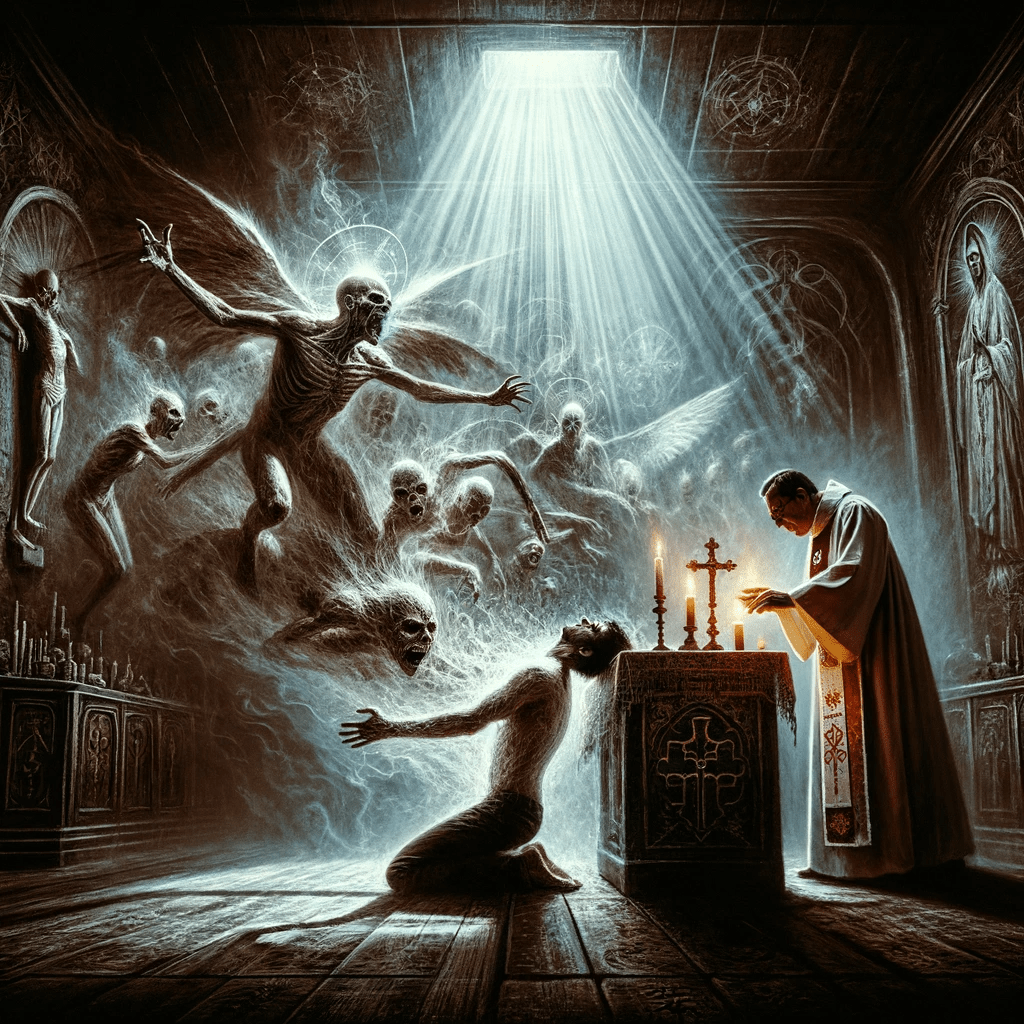
Demonic possession and exorcism have been subjects of fascination, fear, and religious significance for centuries. Demonic possession is the belief that a person’s body or mind is taken over by a malevolent entity, typically referred to as a demon or evil spirit. Exorcism, on the other hand, is the religious or spiritual practice of expelling these entities from the possessed individual. These beliefs and practices are not limited to one particular culture or time period but have appeared in various forms across the world throughout history, from ancient Mesopotamia to the modern Western world.
Records from as early as 2000 BC describe Mesopotamian priests using incantations to drive out spirits such as Lamashtu. Texts such as the Utukku Lemnutu incantations reveal structured rituals designed to expel harmful entities, practices that influenced later Jewish and Christian traditions. In Jewish scripture, the Book of Tobit recounts the archangel Raphael expelling a demon. In early Christianity, the Gospels describe Jesus casting out demons, including the account of the Gerasene demoniac in the Gospel of Mark. During the medieval period, works such as the Malleus Maleficarum (1486) linked possession to witchcraft, contributing to a surge in exorcism practices during European witch hunts. Across cultures, similar traditions developed. In Islam, ruqyah involves reciting verses from the Qur’an, particularly Surah Al-Fatihah, to expel jinn. In Hindu traditions, bhut vidya draws from the Atharva Veda and includes ritual chants and mantras aimed at removing harmful spirits. In West Africa, Yoruba Ifá divination may address spirit affliction, while Navajo Enemy Way ceremonies seek to restore spiritual balance following harmful encounters.
While the concept of demonic possession and exorcism is deeply rooted in religious and cultural traditions, the scientific community approaches these phenomena from a different standpoint. There is no empirical evidence to support the existence of demons or supernatural possession, as it cannot be observed or measured using the scientific method. Scientific explanations for possession-like symptoms include psychological and neurological disorders. Conditions such as schizophrenia, dissociative identity disorder (formerly known as multiple personality disorder), epilepsy, Tourette’s syndrome, conversion disorder, and substance-induced psychosis can produce symptoms that may resemble what believers interpret as possession, including altered states of consciousness, vocal changes, hallucinations, and dramatic shifts in behavior. Brain imaging studies have shown that temporal lobe disturbances can influence intense religious or dissociative experiences. The American Psychiatric Association recognizes possession-form experiences as cultural expressions of distress rather than literal spirit control. Studies published in journals such as the Journal of Religion and Health have found that many documented possession cases align with dissociative disorders. Anthropologists have also described the nocebo effect, in which strong negative expectations rooted in belief systems may intensify physical or psychological symptoms.
In a segment aired on December 13, 2019, on the Australian program A Current Affair, an American Catholic priest trained in Rome shared his experiences as an exorcist. Father Vincent Lampert trained for three months in Rome in 2005–2006, where he observed experienced exorcists and studied the Church’s formal rite. He later became one of approximately a dozen officially appointed exorcists in the United States at that time. In interviews, Lampert has described cases in which individuals displayed hostility toward sacred objects, spoke in altered voices, or demonstrated unusual strength. He has also stated that requests for exorcism have risen in recent decades, which he attributes to spiritual confusion, occult involvement, and addiction. The Catholic Rite of Exorcism, revised in 1999, requires psychological and medical evaluation, permission from a bishop, and discernment of signs traditionally associated with possession. The International Association of Exorcists now reports hundreds of members worldwide, reflecting the continued institutional presence of the practice.
Anneliese Michel’s story, known to many as the case that inspired The Exorcism of Emily Rose, remains one of the most widely discussed modern examples. Between 1975 and 1976, Michel underwent 67 exorcism rites over approximately ten months. Initially diagnosed with temporal lobe epilepsy, including grand mal seizures, she later reported experiencing demonic visions and claimed to be possessed by multiple entities, including Lucifer, Judas Iscariot, Nero, Cain, Adolf Hitler, and a disgraced 16th-century priest named Fleischmann. She stopped taking prescribed anticonvulsant medication during the exorcism period. Audio recordings from her sessions captured intense vocalizations and prolonged prayer rituals. She died in 1976 at age 23, weighing approximately 68 pounds, from malnutrition and dehydration. In 1978, her parents and the two priests involved were convicted of negligent homicide and received suspended sentences. The case led to stronger medical oversight requirements in Germany and influenced broader discussions within the Catholic Church regarding evaluation procedures.
Several books have explored demonic possession and exorcism from historical, theological, and experiential perspectives. The Rite: The Making of a Modern Exorcist by Matt Baglio documents the journey of a priest studying exorcism in Rome and was later adapted into a film. Possession, Exorcism, and Hauntings by Adam C. Blai examines the subject through the lens of Catholic demonology and Church practice. William Peter Blatty’s novel The Exorcist, inspired by a 1949 case that began in Maryland and culminated in St. Louis, played a significant role in shaping modern cultural images of possession. Having the Spirit of Christ: Spirit Possession and Exorcism in the Early Christ Groups by Giovanni B. Bazzana studies spirit possession in early Christianity from a scholarly perspective. Other notable works include Hostage to the Devil by Malachi Martin, American Exorcism by Michael Cuneo, The Devil Within: Possession and Exorcism in the Christian West by Brian Levack, and The Devil Is Afraid of Me by Father Gabriele Amorth. Cross-cultural analyses such as Spirit Possession around the World edited by András Zempléni further demonstrate the global scope of these beliefs.
Theologian and historian Jeffrey Burton Russell has written extensively on the historical development of ideas about the Devil and evil, particularly in works such as The Prince of Darkness. He traces evolving concepts of demonic forces from ancient dualistic traditions through medieval Christianity, noting how narratives of possession often reflected broader social and moral concerns. Across time, believers have maintained that malevolent spirits can take control of an individual’s body or mind, resulting in suffering and erratic behavior. Exorcism is seen as the means of restoring spiritual order and freeing the afflicted person. This belief continues to hold religious significance for millions worldwide.
Today, interest in exorcism persists. Surveys indicate that around half or more of Americans believe in demonic possession or the devil. A 2013 YouGov survey found that 51% of Americans expressed belief in demonic possession, and other polling has shown belief in the devil reaching or exceeding 70% in certain demographics. Catholic dioceses in the United States have reported substantial increases in requests for exorcism since the early 2000s. Globally, belief in spirits or demonic forces remains widespread, particularly in parts of Africa, Latin America, and Asia. Throughout history, demonic possession and exorcism have reflected humanity’s attempts to interpret suffering, evil, and unseen forces. Whether approached through faith, scholarship, or cultural analysis, the subject remains a powerful and enduring part of human experience.