Smoke After Aid: Correlations Between Ukraine Commitments and Smoke in Southern Ontario Amid UAP Questions
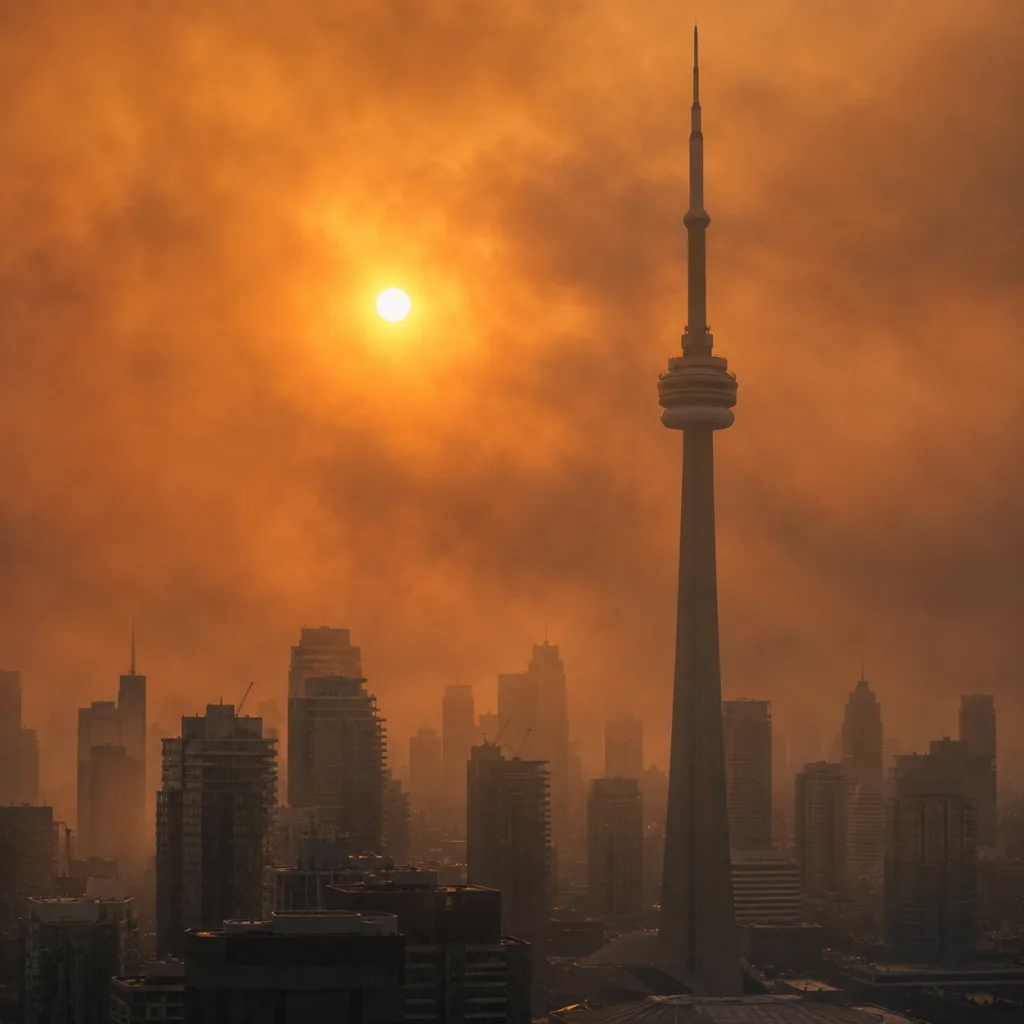
The core hypothesis is that wildfire smoke and hazy conditions in Southwestern Ontario have become a recurring new normal only in recent years, particularly surging from 2023 onward. Locals in the region did not experience or remember this level of smoke as normal during the 1970s through most of the 2010s. The timing aligns with the Russia-Ukraine war that began on February 24, 2022, and Canada’s rapid provision of substantial financial and military aid to Ukraine starting the same month and continuing through multiple major packages since then. Alternative explanations that have circulated include possible laser beams or directed energy weapons igniting fires, with some social media discussion pointing to patterned fire starts in the 2023 Quebec and northern Ontario fires.
Southwestern Ontario experienced notable wet conditions in 2026, with heavy rainfall and flood watches in several periods, particularly March and April. Toronto recorded 336 mm of precipitation from January through April, one of the higher totals in recent years, while some areas like Wiarton broke previous records. This creates a noticeable contrast with the wildfire smoke that still reached the region in mid-July. People in Ontario are likely to question why smoke is appearing despite these wet conditions, and this observation sits at the center of the hypothesis. The smoke on July 14–15, 2026, came from active wildfires in northern Ontario and northern Minnesota, carried south by northwesterly winds under high-risk air quality forecasts.
Research into historical Canadian news sources before February 2022 shows very little coverage of wildfire smoke as a recurring or notable issue specifically in Southwestern Ontario. Targeted searches of archives and reports from the 1970s through 2010s turned up almost no prominent articles describing smoke from distant fires affecting the Windsor-Essex, Chatham-Kent, or surrounding areas in a significant way. This supports local memory that such conditions were not part of normal experience in earlier decades. The pattern of repeated, noticeable smoke only generated widespread reporting starting with the record 2023 wildfire season.
A timeline of major Canadian aid commitments to Ukraine shows observable overlaps with periods of elevated smoke in southern Ontario. On July 7, 2026, Canada announced approximately 900 million dollars in new military assistance including vehicles, munitions, and air defence systems during a meeting between Prime Minister Mark Carney and President Zelenskyy at the NATO Summit in Ankara. Roughly one week later smoke arrived in Southwestern Ontario. In June 2025 Canada committed 2 billion Canadian dollars in assistance at the G7 Summit in Quebec during a year that became the second-worst fire season on record. Multiple aid packages in 2022 and 2023 coincided with the record wildfire season that produced repeated heavy smoke across southern Ontario.
Claims have circulated on social media and in some videos that laser beams or directed energy weapons from the sky have started fires in Canada, particularly during the 2023 Quebec and northern Ontario fire seasons. Some users shared satellite imagery suggesting fire start locations appeared clustered or patterned in ways described as unnatural or suspicious, sometimes called a buckshot pattern.
A related online trend involves people discussing or recommending painting roofs blue or with reflective coatings supposedly for protection against lasers or directed energy weapons. While this idea gained significant traction after the 2023 Maui (Lahaina) wildfires, it was not limited to that event. Similar claims resurfaced during the 2024 wildfires in Chile and have appeared in discussions around certain California fire events as well. The theory generally suggests that blue roofs or objects “survive” fires because directed energy weapons (lasers) interact differently with specific colors or reflective surfaces. Some posts have gone further, claiming that people in affected areas are actively painting their roofs blue as a protective measure. These ideas have roots in earlier theories, including comments made by U.S. Congresswoman Marjorie Taylor Greene in 2018, in which she suggested that lasers may have been used to start California wildfires.
These observations connect to broader discussions comparing human-directed energy weapons with unexplained beams associated with unidentified aerial phenomena. Directed energy weapons such as high-energy lasers and microwaves are established military technologies capable of precise targeting and, in some cases, starting fires through rapid heating. Some speculate that observed beams or patterned ignitions could involve advanced or reverse-engineered systems. Unexplained aerial phenomena beams have been reported in historical cases with effects including burns, electrical disturbances, and environmental impacts that differ from controlled human weapons. The roof-painting trend and social media analysis of fire patterns fit into this wider conversation about whether certain effects stem from human-developed capabilities, genuinely unexplained phenomena, or misidentified natural events.
Havana Syndrome, a mysterious set of neurological symptoms first reported among U.S. diplomats and intelligence personnel, has also been linked by some victims and researchers to directed energy weapons. Symptoms have included sudden onset of headaches, dizziness, cognitive impairment, and in some cases, physical burn marks. While the cause remains officially unresolved, the possibility of directed energy attacks has been seriously considered by U.S. government agencies. More recently, there have been reports of Havana Syndrome-like incidents affecting members of Congress and their staff, further elevating the issue from a diplomatic concern to one of national security and legislative oversight. This development adds weight to broader discussions about the existence and potential misuse of directed energy technologies.
A cluster of disappearances and deaths among scientists and personnel tied to U.S. nuclear, aerospace, defense, and UAP-related programs has been documented in 2025 and 2026. Several cases show unusual “walk-out” patterns and geographic concentration around sensitive sites such as Los Alamos National Laboratory and NASA Jet Propulsion Laboratory areas. Multiple individuals had backgrounds in plasma physics, fusion, exotic propulsion, and advanced materials research. Congressional interest has been expressed, with the House Oversight Committee and Chairman James Comer reviewing the pattern for potential commonalities, ties to classified programs, or national security implications. The FBI has also been referenced in connection with assessments of the cases. Speculation has included possible silencing or cover-ups related to sensitive technology programs, with some references to directed energy weapon targeting in specific instances.
Current congressional and public efforts continue to push for greater UAP transparency. In 2026 Congressman Eric Burlison demanded U.S. records on the 1996 Varginha, Brazil incident involving a reported crashed craft and non-human entities. This occurs alongside ongoing secrecy, including CIA Director John Ratcliffe’s reluctance to discuss alien life publicly and May 2026 testimony alleging spying on UAP whistleblowers. These developments provide current-events context for the tension between transparency efforts and persistent barriers to full disclosure in UAP and related defense programs.
Plausible deniability has long been a core principle in intelligence and advanced weapons programs, allowing operations or effects to be carried out while maintaining the ability to credibly deny involvement if discovered. During the Cold War, real programs explored weather modification as a potential weapon. One documented example is Project Popeye, in which the United States used cloud seeding in Vietnam during the 1960s and early 1970s to extend the monsoon season and disrupt enemy supply lines. Declassified documents show military interest in creating effects such as flooding or drought that would be difficult to prove as deliberate acts. The use of fire as a weapon has even deeper historical roots, dating back to ancient times. The Byzantine Empire famously employed “Greek fire,” an incendiary weapon that burned on water and was used effectively in naval warfare. Ancient Greek and Roman forces routinely used fire arrows, burning projectiles, and fire ships during sieges to destroy enemy fortifications and cities. These historical precedents demonstrate a long-standing human interest in technologies capable of producing significant effects while complicating attribution.
In Southwestern Ontario the combination of wet conditions with periods of heavy rain and flood watches in 2026 alongside the arrival of wildfire smoke raises questions for residents. People in the region are likely to notice and wonder why smoke is present when wet weather has been observed. The recurring smoke has shown a consistent pattern of appearing around the time of major Canadian aid commitments to Ukraine, which helps explain why it now feels like a new normal compared to earlier decades when such smoke events were rarely reported in local news.
The research document will continue to be updated with new findings as they emerge. All entries aim to track evidence objectively while respecting local observations in Southwestern Ontario.
Table: Timeline Correlation with Dollar Amounts
| Announcement Date | Announcement / Headline Summary | Aid Amount | Smoke Onset / Peak Dates | Smoke Event Details / Headlines Summary | Gap & Notes |
|---|---|---|---|---|---|
| July 7, 2026 | Canada unveils new military aid package during PM Carney’s meeting with President Zelenskyy at NATO Summit in Ankara (vehicles, munitions, air defence systems). Headline: “Canada Unveils $900 Million Military Aid For Ukraine” | ~$900 million CAD (new military assistance) | July 14–15, 2026 (current) | Smoke from northern Ontario & Minnesota wildfires reaches Southwestern Ontario. High AQHI risk forecast, Environment Canada warnings; hazy conditions and air quality issues in southern areas. | ~1 week gap. Clear recent example of the pattern described. |
| June 17, 2025 | Canada commits major assistance package for Ukraine’s defense and reconstruction at G7 Summit in Quebec. Headline style: “Canada commits US$1.4 billion to Ukraine at G7 Summit” | CAD $2 billion (approx. US$1.4 billion) | Multiple events throughout summer 2025 (2025 = 2nd-worst fire season) | Widespread smoke events affecting southern Ontario during elevated 2025 fire activity and smoke transport. | Overlap with second-worst smoke year. Pattern continues with major commitments. |
| 2022–2023 (ongoing packages) | Initial and renewed major aid commitments following Feb 2022 invasion (multiple tranches). Various headlines on new support for Ukraine. | Billions CAD total (cumulative since invasion) | Spring–Summer 2023 (record wildfire season) | Record wildfires; repeated heavy smoke blanketing southern Ontario (Toronto area etc.), air quality crises, extensive media coverage of hazy skies and health impacts. | Strongest timing correlation during period of sustained commitments. 2023 remains peak example. |