Prince of Peace
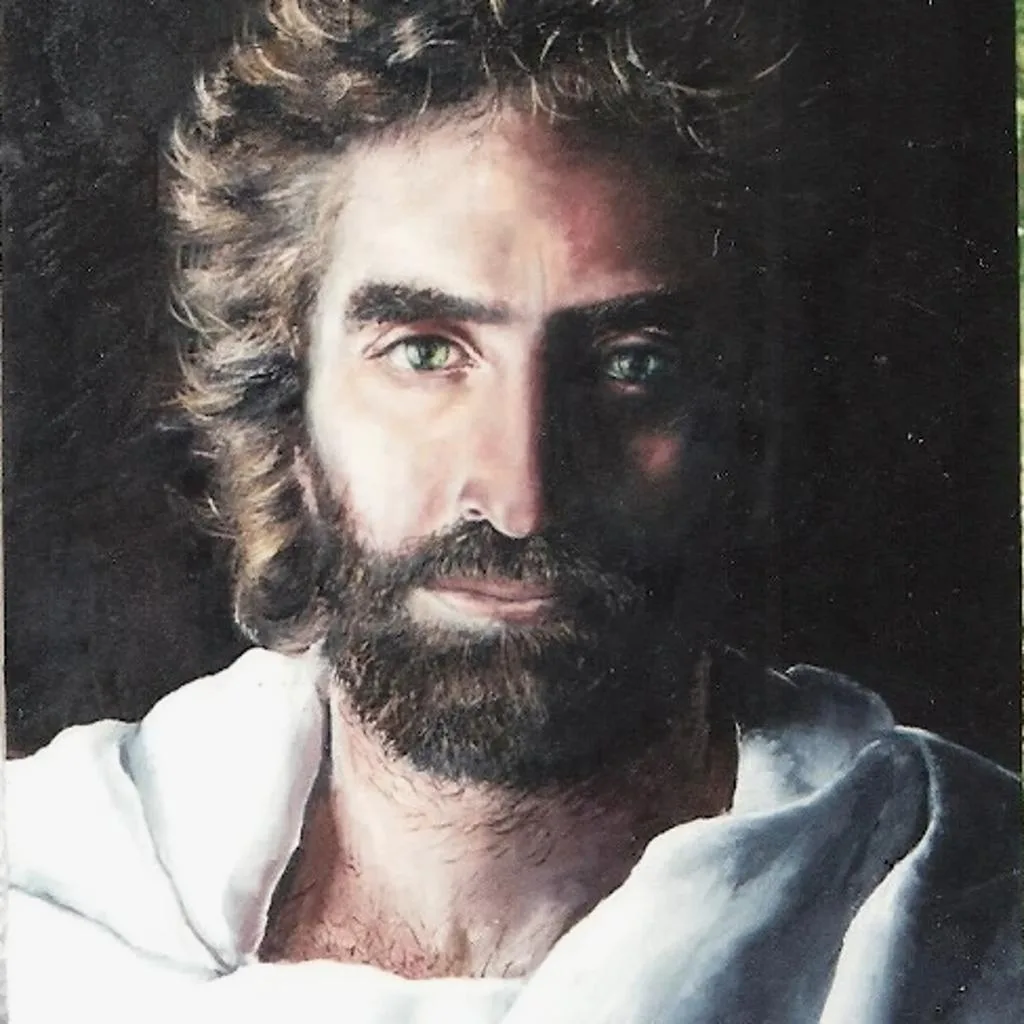
There are moments in a person’s life that refuse to fit inside the normal boundaries of explanation. For Akiane Kramarik, the American child-prodigy painter and poet known for her divinely inspired visions, that moment came at around five years old on a rainy spring day in small-town Illinois. By that age, Akiane had already been receiving vivid heavenly visions since she was three or four, describing encounters with God, Jesus, Heaven, and angels despite growing up in a household where these ideas were never taught or discussed.
What followed would become the single most unusual and defining event of her early life, something she would later publicly call her “disappearance to heaven.” According to her own detailed accounts shared in interviews, her physical body simply became undetectable.

In a quiet town where nothing like this had ever occurred, the response was immediate and widespread. Search-and-rescue teams were deployed, police became involved, and families across the area joined in. Hundreds of vehicles were stopped and inspected, roads were monitored, and her photograph was circulated throughout the community. Despite the scale of the effort, there was nothing. No trace, no confirmed sighting, no explanation. It was, in her own words, as if she had “dropped off the radar somehow.”
While the search unfolded on the ground, her own experience was something entirely different. She has described remaining fully aware and present, yet completely invisible to those looking for her. “I was still around them,” she said, “just invisible.” From what she describes as an elevated perspective, she could see everything with striking clarity, the exact number of searchers, the vehicles, the families moving through the area, all unfolding in real time beneath her.
But the experience extended far beyond simple observation. She recalls simultaneously existing across what felt like millions of dimensions or lives at once, as if her awareness had expanded beyond a single body or location. She described the sensation as being “pixelated into millions of pieces,” fragmented yet fully conscious, existing across multiple layers of reality at the same time.
In that state, she was not just watching events unfold, she was present within them, above them, and beyond them all at once.The experience itself, as she tells it, was fluid and overwhelming, something that could not be fully captured using ordinary language.
Yet for Akiane, its meaning has always remained clear. She has consistently framed the event not as a random anomaly or an abduction, but as a divine, multidimensional spiritual encounter with Heaven, directly connected to the same source as her earlier visions. This moment did not exist in isolation. It reinforced a consistent pattern she has described for more than two decades, one centered on what she views as positive, God-initiated revelations intended to communicate love, purpose, and a deeper structure of reality.
The intensity of her experiences would later be reflected in her work, including her well-known painting Prince of Peace, completed when she was eight years old.
Akiane tells her full story behind Prince of Peace — the recurring visions of Jesus that inspired it, the unexpected carpenter who became the model, and the dramatic theft and eventual recovery of the masterpiece. Akiane herself chose the title Prince of Peace.
It came directly from her heavenly visions of Jesus as known in the ancient biblical prophecy in Isaiah 9:6. The title “Prince of Peace” is even older than the time of Jesus. Among the Dead Sea Scrolls, the Great Isaiah Scroll (dated to approximately 125–100 BC) preserves the exact prophecy of Isaiah 9:6, already referring to the coming Messiah as “Wonderful Counselor, Mighty God, Everlasting Father, Prince of Peace.”
In this early interview, a bright-eyed, blonde-haired, blue-eyed 9-year-old Akiane appears on The Oprah Winfrey Show and explains her heavenly visions, how she created the Prince of Peace painting, and why she believes her artistic gift comes directly from God.
Whether interpreted as a spiritual event, a psychological phenomenon, or something not yet understood, the “disappearance to heaven” remains one of the most striking firsthand accounts of expanded consciousness in a child. A young girl vanished without a trace, an entire town searched without success, and yet from her own perspective, she was never truly gone. She was simply somewhere else, aware, present, and immersed in something far beyond the physical world. That same divine source — the visions of Heaven and Jesus that began when she was three or four — later produced the painting that would carry the ancient biblical title “Prince of Peace”.