Viktor Grebennikov
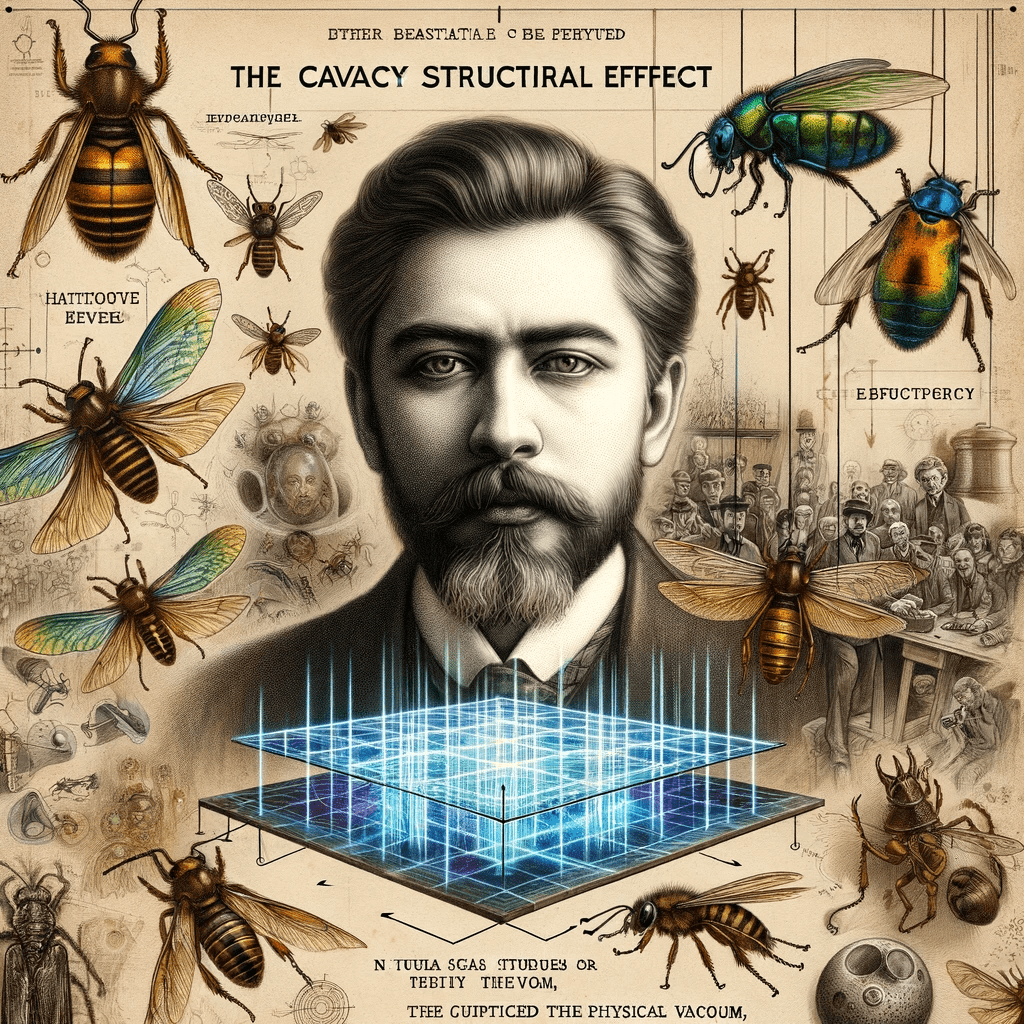
Viktor Stepanovich Grebennikov was a Russian entomologist, naturalist, inventor, and author, born on April 23, 1927, in Simferopol, Crimea, and passing away on April 10, 2001, in Krasnoobsk near Novosibirsk following complications from a stroke. His life and work generated lasting intrigue due to his independent scientific path, his studies of insects, and his later claims concerning a levitation platform.
Grebennikov did not receive formal higher education through a university faculty of natural sciences. Instead, he was largely self-taught, developing his knowledge through independent study, field observation, and decades of hands-on research. Born to a mother of noble background and a mechanically skilled father, he grew up during the economic hardship of the 1930s Soviet period. In his autobiographical reflections, he described severe hardship during the Stalin era, including accounts of detention and survival under repressive conditions. Much of this information comes primarily from his own writings, where he credited these early experiences with shaping both his resilience and his unconventional intellectual path.
Throughout his professional life, Grebennikov worked within agricultural and ecological research institutions in Siberia. He served as a junior research fellow at the Research Institute of Soil Management and Chemicalization of Agriculture in Krasnoobsk, which operated under the Siberian Branch of the USSR Academy of Agricultural Sciences (VASKhNIL). Over time, the institute’s name evolved, later becoming associated with the Siberian Research Institute of Agriculture and Soil Science. He conducted extensive fieldwork on pollinating insects and agricultural ecosystems for many decades. He contributed articles to the Russian journal “Science and Life” (Nauka i Zhizn’), but he was not its editor. He authored several books, including “A Million Riddles” (1968), “Mysteries of the World of Insects” (1990), and “My World” (1997).
In discussions surrounding unusual aerial observations, Grebennikov sometimes suggested that natural biological and atmospheric phenomena—such as swarms of insects, luminous atmospheric effects, or structured insect formations—could be misinterpreted as unidentified flying objects. Within his broader framework, he connected such observations to structural and environmental effects he associated with the Cavity Structural Effect.
Grebennikov’s most well-known concept is what he termed the “Cavity Structural Effect” (CSE). He described this effect as arising from specific geometrical microstructures found in certain natural formations, particularly within the chitinous shells of insects. According to Grebennikov, these microscopic cavities and repeating patterns interacted with what he referred to as the “physical vacuum.”
The Cavity Structural Effect (CSE), as described in his writings, emerges when particular geometric arrangements are organized in precise configurations. Grebennikov associated this interaction with the physical vacuum or zero-point field—a concept in quantum field theory referring to the lowest energy state of a system, where quantum fluctuations remain present even at absolute zero.
He asserted that under certain structural conditions, measurable physical effects could occur, including weight reduction, altered perception, invisibility effects, disturbances in photographic equipment, and levitational behavior. Grebennikov reported that the microstructures on the wing cases of specific beetles provided the structural template for his experiments, though he did not publicly identify the species. Based on these observations, he claimed to have constructed a platform utilizing similar structural principles.
In his book “My World,” Grebennikov described experiments conducted in 1988 in which he reported observing unusual physical reactions while examining insect wing structures under magnification. He later described building experimental instruments and prototype assemblies to test the phenomenon, including cavity-based configurations using natural and artificial honeycomb structures. He stated that he filed a patent application in 1990 in collaboration with Professor V. Zolotarev related to devices utilizing cavity structures. In 1995, he was also granted a Russian patent (RU 2061509, published in 1996) for a therapeutic device using dry beehive honeycomb structures to enhance the effectiveness of medicinal treatments.
In his personal accounts, Grebennikov reported high-speed flights, estimating velocities between 1,500 and 2,400 kilometers per hour, along with unusual perceptual and physical effects during operation of his platform. These descriptions were based on his own testimony and diary-style records; no independently documented public demonstrations or reproducible trials were formally recorded. He described maintaining secrecy about certain structural details in order to prevent ecological harm or exploitation.
Beyond these claims, Grebennikov was a committed naturalist and conservation advocate. He specialized in pollinating insects and agricultural ecology and stated in his own accounts that he established eleven entomological micro-reserves: eight in the Omsk region, one in the Voronezh region, and one or more near Novosibirsk. These protected areas were intended to preserve pollinator habitats and fragile steppe ecosystems.
He was also a skilled illustrator and painter, creating detailed artistic renderings of insects and natural environments. In 1976, he founded the Museum of Agroecology and Environmental Protection in Krasnoobsk, where his artwork and ecological exhibits were displayed.
His book “My World” presents a detailed personal account of his life, his research, and his interpretation of the Cavity Structural Effect. The work serves as the primary source for understanding his perspective on levitation experiments and structural vacuum interaction. It combines autobiography, ecological documentation, artistic illustration, and technical description of his experimental apparatus.
Grebennikov’s work received attention in Russian media during the late Soviet and early post-Soviet period. In 1991, the newspaper “Komsomolskaya Pravda” published an article titled “The Flight of Viktor Grebennikov,” describing his reported platform and the public interest surrounding his claims. Television coverage and broader discussion followed during that period.