Stan Gordon
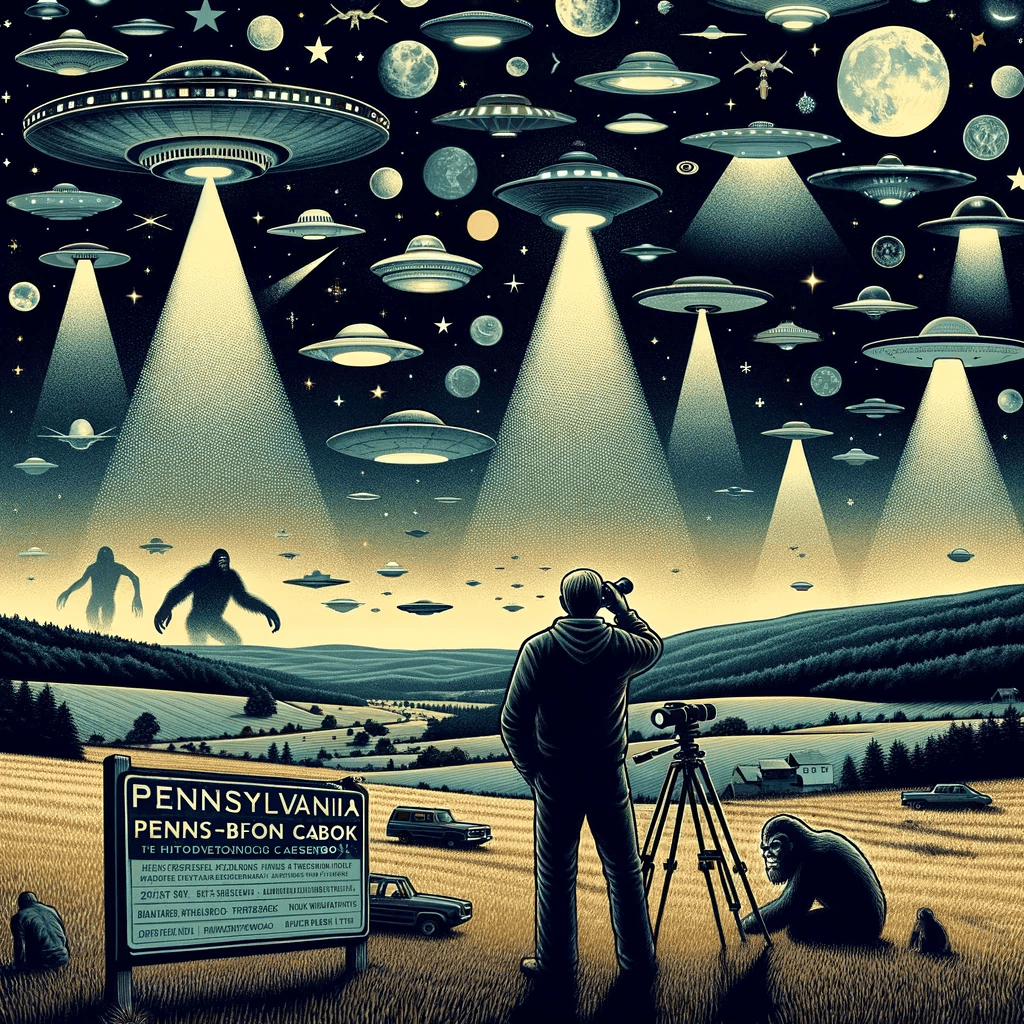
Stan Gordon is one of the most established and methodical civilian researchers in American UFO and high‑strangeness investigation. Born in 1949 and based in Greensburg, Pennsylvania, Gordon has spent more than six decades documenting unidentified aerial phenomena, cryptid encounters, and physical trace cases, assembling one of the most detailed regional archives of anomalous activity in the United States.
His interest in anomalous phenomena began in October 1959, at the age of ten, after hearing a radio program discussing unexplained events. That early exposure sparked a lasting curiosity not only in UFOs but also in science, electronics, and communications. He later pursued a professional career as an electronics technician specializing in radio communications and advanced consumer electronics, working in the field for more than forty years. This technical background strongly influenced his investigative style, emphasizing instrumentation awareness, disciplined documentation, and firsthand data rather than conjecture.
Despite decades of investigation, Gordon has consistently stated that he has never personally witnessed a UFO, Bigfoot, or other anomalous phenomenon. He frequently highlights this fact in interviews to underscore his reliance on credible witness testimony and physical evidence, reinforcing his commitment to objectivity and restraint.
By the late 1960s, Gordon was already active in organized UFO research. He served as the telephone UFO sighting report investigations coordinator for the UFO Research Institute of Pittsburgh, handling initial public reports and coordinating follow‑up investigations. His formal fieldwork began in 1965 through direct on‑site investigations.
A defining case in his career occurred on December 9, 1965, with the Kecksburg UFO incident. Witnesses described an acorn‑shaped metallic object descending and coming to rest in a wooded area near Kecksburg, Pennsylvania. Reports included unusual markings on the object, rapid military deployment, road closures, and alleged recovery operations. Gordon conducted extensive interviews, site examinations, and archival research on the incident over multiple decades. In December 2025, marking the sixtieth anniversary of the event, he released an updated report incorporating newly surfaced witness testimony, declassified material, and an updated sculpted depiction of the object created by artist Ron Lanham, further solidifying Kecksburg’s status as one of the most significant unresolved UFO incidents in U.S. history.
In 1970, Gordon founded the Westmoreland County UFO Study Group, which later expanded into broader investigative efforts across Pennsylvania. For many years, he coordinated volunteer investigative teams that included scientists, engineers, technicians, police officers, and former military personnel. These multidisciplinary teams conducted on‑site investigations into UFOs, Bigfoot, cryptids, and other anomalous events well before formal associations with later organizations.
Gordon later served as Pennsylvania State Director for the Mutual UFO Network and, in 1987, became the first recipient of MUFON’s Meritorious Achievement Award. By 1993, he transitioned fully to independent research while remaining closely associated with the Pennsylvania Association for the Study of the Unexplained, an organization he helped establish to support cross‑disciplinary investigation of anomalous phenomena.
Since 1969, Gordon has operated a continuous public reporting system through a dedicated hotline and email contact, receiving thousands of firsthand accounts. His Pennsylvania case archive alone exceeds three thousand documented reports and includes low‑altitude UFO sightings, structured craft, luminous orbs, electromagnetic effects on vehicles, animal reactions, and physical ground traces. His broader investigative work spans thousands of additional events beyond the state.
He is particularly known for preserving data from the 1973–1974 Pennsylvania UFO–Bigfoot wave, during which reports of large ape‑like creatures coincided with sightings of glowing aerial objects. Rather than separating these events into unrelated categories, Gordon retained them as a unified dataset, allowing later researchers to explore potential correlations. His work also extends to reports of thunderbirds, large panther‑like animals, and other cryptids, often reported in proximity to UFO activity. Gordon has long emphasized that many encounters suggest an interconnected high‑strangeness phenomenon rather than isolated incidents.
Gordon’s published works draw directly from his case files and emphasize raw testimony, chronology, and physical evidence. His confirmed books include Silent Invasion: The Pennsylvania UFO‑Bigfoot Casebook, Really Mysterious Pennsylvania: UFOs, Bigfoot and Other Weird Encounters in the Keystone State, Astonishing Encounters: Pennsylvania’s Unknown Creatures, and Creepy Cryptids and Strange UFO Encounters of Pennsylvania. Together, these volumes represent one of the most comprehensive regional records of anomalous phenomena available.
In addition to writing, Gordon has produced and contributed to numerous documentaries and media projects. He produced the award‑winning 1998 video Kecksburg: The Untold Story and has appeared on programs such as Unsolved Mysteries, Coast to Coast AM, and the History Channel, including an episode of In Search of Aliens filmed at the Kecksburg site. He has also been featured in documentaries such as Invasion on Chestnut Ridge and A Wish for Giants, along with frequent appearances on podcasts discussing his investigations and long‑term research.
Gordon remains actively engaged in investigation and public outreach. During 2025, he reported a noticeable increase in Pennsylvania sightings, including close‑range UFO encounters, low‑level orbs, Bigfoot tracks, and vocalizations in wooded areas across multiple counties. Reports came from a wide range of witnesses, including police officers, teachers, and families. He has attributed part of this increase to heightened public awareness amid renewed federal discussion of UAPs. In 2026, he continues to present lectures, conduct interviews, and participate in conferences and library events, with ongoing updates to his public case files.