Close Encounter Classification System
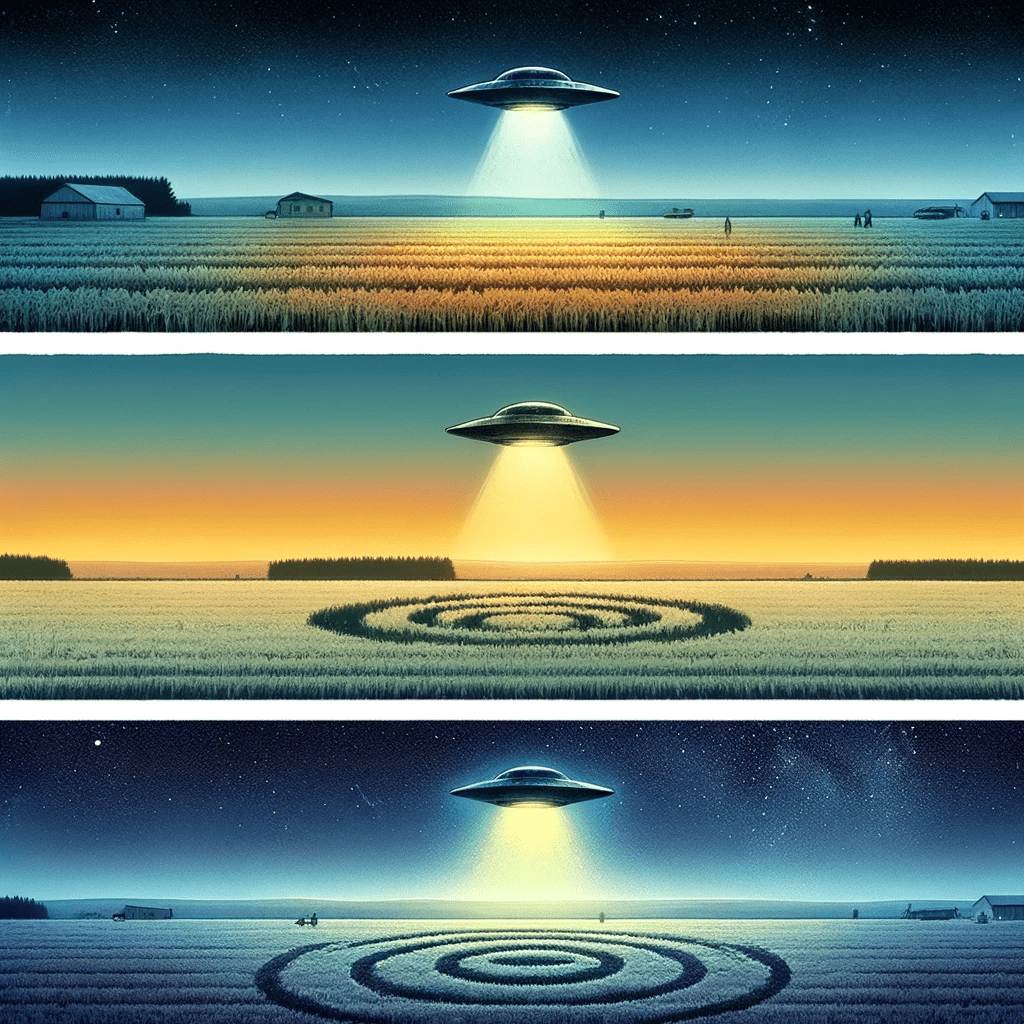
The “Close Encounter” classification system is most widely associated with Dr. J. Allen Hynek’s 1972 book “The UFO Experience: A Scientific Inquiry,” but the core framework actually began earlier. Hynek first outlined the structure publicly in a December 1969 presentation to the American Association for the Advancement of Science (AAAS), where he analyzed over two decades of sighting reports and proposed a more disciplined way to categorize them. The book later formalized and expanded this approach, helping it reach a much wider audience.
Hynek’s full framework was broader than just the three Close Encounter categories. He first divided sightings into distant observations—Nocturnal Lights, Daylight Discs, and Radar-Visual cases—before introducing Close Encounters for incidents occurring at relatively close range. These closer cases were considered higher quality because they offered more observable detail and reduced the likelihood of misidentification.
Within this system, Close Encounters of the First Kind referred to a visual sighting of an unidentified object seemingly less than 500 feet (150 meters) away that shows an appreciable angular extension and considerable detail. The emphasis is not just proximity, but that the object appears extended rather than point-like, allowing observers to distinguish it from stars, aircraft, or other conventional explanations. Close Encounters of the Second Kind described cases where a measurable physical effect on either animate or inanimate matter was reported. These could include ground traces, scorched vegetation, interference with vehicles or electronics, unusual animal reactions, or physiological effects on witnesses such as heat or temporary paralysis. Close Encounters of the Third Kind referred more precisely to the presence of occupants in or about the object, often described as humanoids or apparent pilots. Hynek noted that this category carried the highest level of strangeness and was the most difficult to evaluate.
At the time, this kind of structured approach stood out. UFO reports were often treated as either unquestioned belief or outright dismissal, with little effort to organize the data in a meaningful way. Hynek’s system didn’t attempt to prove what the phenomenon was, but it created a consistent language that made comparison possible. That alone helped researchers identify recurring patterns across cases that might otherwise seem isolated or random.
The phrase “Close Encounters of the Third Kind” reached a much broader audience after Steven Spielberg’s 1977 film of the same name. Spielberg consulted Hynek as a technical advisor, paid to incorporate real-case elements into the story, and even secured permission to use the phrase as the film’s title. Hynek also made a brief cameo as a bearded scientist observing the landing sequence at the end, which helped cement the terminology in popular culture.
Over time, the system was expanded by other researchers. Jacques Vallee, who had collaborated with Hynek earlier in his career, later introduced additional categories such as CE4 and CE5 in his 1990 book “Confrontations.” These additions attempted to account for additional types of encounters. In Vallée’s formulation, CE4 primarily referred to abduction experiences but was also broadened to include cases where witnesses experienced a transformation of their sense of reality, including dreamlike or non-physical events associated with UFOs. CE5 focused more specifically on physical effects on the witness, such as injury or reported healing. However, these later extensions were developed after Hynek’s death in 1986 and have not achieved the same level of acceptance, largely because they moved further away from the stricter observational framework Hynek originally emphasized.
What makes Hynek’s contribution especially notable is how his perspective evolved. He began his work as a scientific consultant for the U.S. Air Force, starting with Project Sign in 1948, followed by Project Grudge, and later Project Blue Book. His initial role was largely to explain sightings in conventional terms, and early on he was openly skeptical. Over time, however, repeated exposure to credible witnesses—particularly trained observers like military pilots—and frustration with the Air Force’s dismissive stance led him to reconsider. By the 1960s, he was openly critical of how cases were being handled and argued that some reports deserved serious scientific attention.
His classification system ultimately provided something simple but powerful: a neutral way to describe experiences without immediately forcing a conclusion about their origin. Instead of debating whether UFOs represented extraterrestrial technology or something else entirely, researchers and witnesses could at least agree on how to categorize what had been observed. That shift made the conversation more structured and, in many ways, more productive.
Today, Hynek’s Close Encounter system remains a foundational reference point in UFO research. Even as newer terminology like UAP has entered official and scientific discussions, his framework continues to be used by organizations and investigators as a baseline for organizing reports. It stands as one of the clearest early efforts to bring order, consistency, and a degree of scientific thinking to a subject that still resists easy explanation.