Greek Gods and Goddesses with Blonde Hair
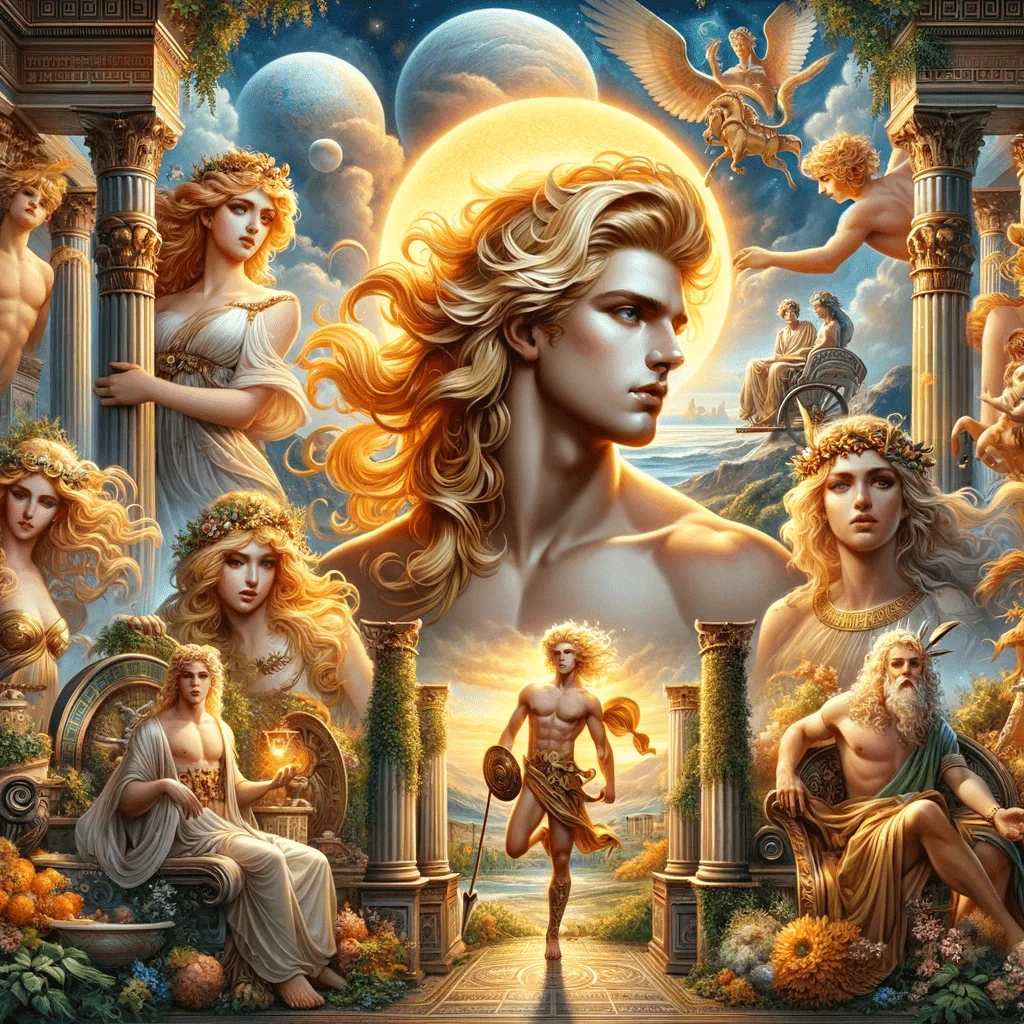
Ancient Greek poets described several gods and goddesses with golden or fair hair. These descriptions appear in the Homeric Hymns, the works of Hesiod, lyric poetry by poets such as Anacreon, Alcaeus, and Sappho, and later works including the Orphic hymns and poems by Callimachus, Nonnus, and Timotheus. The poets used golden or shining hair to express ideas of radiance, youth, beauty, fertility, and divine power.
Ancient Greek and Roman statues were originally painted in bright colors. Traces of pigment survive on some works, including examples where gods had golden or yellow hair.
Blue eyes also appear in ancient sources for certain divine figures. Pausanias records a statue of Athena with blue eyes and links the tradition to Poseidon. He also quotes a description of “blue-eyed Amphitrite.” Ibycus calls the Charites blue-eyed, and Anacreon mentions blue-eyed Nymphs.
Apollo: Apollo is long-haired and unshorn in early tradition. Lyric poets such as Sappho describe him as golden-haired Phoibos. His flowing hair emphasizes eternal youth and beauty while fitting his roles as god of music, poetry, and radiant power. The Homeric Hymn to Apollo has him declare the lyre and the curved bow especially dear to him. In art he regularly appears with the lyre, bow, quiver, laurel wreath, and sometimes a raven.
Demeter: The Homeric Hymn to Demeter calls her “golden-haired” and says her “golden tresses” spread over her shoulders as light shines from her body. She is also described as “rich-haired.” These images connect her directly to the fertile earth and the harvest. During her search for Persephone she wanders with flaming torches. Ancient art commonly shows her with sheaves of wheat, a cornucopia, crown, sceptre, and torch.
Helios: Early hymns describe Helios with golden brilliance. They mention his golden helmet and bright locks streaming from his head. These details present him as the living source of daylight. He drives a golden-yoked chariot pulled by horses across the sky. Artistic images usually show him with radiant golden hair and a crown of sun rays.
Leto: The Homeric Hymn to Apollo refers to “gold-tressed Leto.” The description highlights her dignity as the mother of Apollo and Artemis and links her to their radiant, divine nature.
Dionysus: Hesiod’s Theogony calls Dionysus “golden-haired.” His visual tradition shows the long-haired youthful god carrying the thyrsos, drinking cup, and wearing an ivy crown, often accompanied by grapevine and panther.
Eros: The poet Anacreon calls him “golden-haired Eros.” The image appears in lyric poetry and ties golden hair to youth and irresistible charm. Ancient art and poetry repeatedly show him with bow, arrows, flaming torch, and wings.
Ariadne: Hesiod tells how Dionysus married Ariadne and how Zeus made her immortal. One translation gives blonde-haired Ariadne. Her story includes the thread of the labyrinth and the crown that Dionysus later placed among the stars as the constellation Corona.
Persephone: An Orphic Hymn calls her “fair-haired Persephone.” Ancient art commonly shows her with a flaming torch and sheaves of grain. As queen of the underworld she also appears with throne and sceptre.
Harmonia: The poet Callimachus describes “fair-haired Harmonia.” Her strongest associated object is the famous necklace and robe crafted by Hephaestus, divine works of technology and beauty given as a wedding gift.
Zephyrus: The lyric poet Alcaeus refers to “golden-haired Zephyrus,” the West Wind. In art he appears as a youthful winged figure scattering flowers from his mantle.
Rhea / Cybele / Mother of the Gods: Timotheus calls the Mother of the Gods “gold-tressed Mater Theon.” In later art she is often shown riding in a lion-drawn chariot and holding a staff or sceptre.
Hymenaios: Nonnus describes fair-haired Hymenaios, the god of weddings and wedding song. He is often shown winged and carrying the bridal torch.
Selene: The Homeric Hymn to Helios calls her “rich-tressed Selene.” She drives a moon chariot pulled by horses and wears a golden crown or bright lunar radiance.
Hecate: The Homeric Hymn to Demeter calls her “bright-coiffed Hecate.” She carries torches and later becomes associated with keys and liminal power between worlds.
Some poems mention golden-haired Horae and place them in the company of Aphrodite, Hebe, Harmonia, and the Charites. Ancient sources describe the Charites as rich-tressed, lovely-haired, fair-haired, and, in Ibycus, blue-eyed. These group images use golden or fair hair to suggest collective radiance, grace, and beauty.
Ancient poets used golden, fair, rich, and shining hair as meaningful divine description. These details marked radiance, youth, beauty, fertility, celestial power, erotic charm, and sacred authority. When paired with divine objects — Apollo’s lyre and bow, Helios’s golden chariot, Demeter’s torches and wheat, Eros’s arrows and torch, Harmonia’s crafted necklace, or Ariadne’s starry crown — hair colour became part of a larger visual language. The poets used these combined images to show what each god or goddess was and the powers they embodied.